

AMAZON UNDERWORLD’S FIRST REPORT WAS DEVELOPED TOGETHER WITH AMAZON WATCH AND THE GLOBAL INITIATIVE AGAINST TRANSNATIONAL ORGANIZED CRIME. THE POLICY PAPER SHOWS HOW CRIMINAL ORGANIZATIONS AND ARMED GROUPS HAVE EXPANDED THEIR PRESENCE, INCREASED THEIR POLITICAL CONTROL, AND DIVERSIFIED THEIR ECONOMIC ACTIVITIES IN THE AMAZON, GENERATING GREAT HARM TO THE NATURAL ENVIRONMENT AND AMAZON COMMUNITIES.
Criminal activities in the Amazon, such as illegal gold mining and drug trafficking, drive violence and contribute to deforestation and other forms of degradation in the world’s largest tropical rainforest and a crucial climate regulator. Organized crime’s expansion poses serious threats to the Amazon ecosystem and those best positioned to defend its wellbeing: the Indigenous communities. As violence escalates, Indigenous peoples and land defenders are being killed.
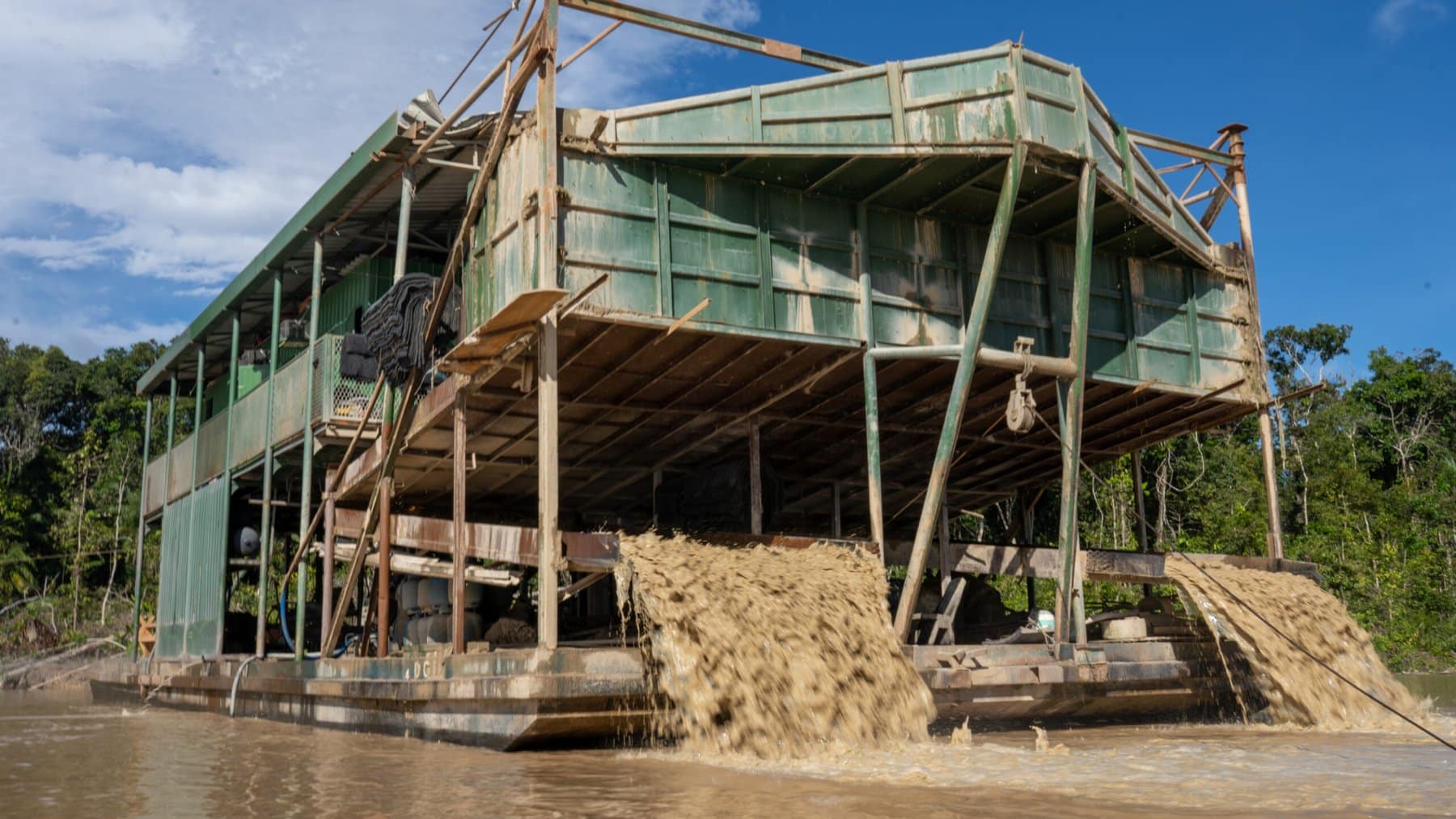
Despite these mounting threats, many Indigenous peoples and communities are courageously defending their territories and livelihoods throughout the Amazon. Their resistance takes many forms: in Peru, the Wampis peoples organize to safeguard their territories and expel gold miners, while the Kakataibo and Shipibo-Konibo peoples have organized Indigenous guards to protect against coca crop invasions. In Ecuador, the Indigenous Federation of the Napo mobilizes their peoples and pressures the government to act against illegal mining. Meanwhile in Brazil, the Munduruku, Yanomami, and Kayapó have formed a historic alliance to resist illegal gold prospectors in their territories. However, this vital work of environmental defense comes at an enormous cost. Indigenous organizations and leaders face constant threats to their lives and families, becoming increasingly targeted for violence and murder as they stand against the criminal forces destroying their ancestral lands.
This new report brings a regional look at the issue in order to advocate for effective and holistic policies that center Indigenous rights in efforts to contain organized crime.
The report proposes the need for “comprehensive public policies that go beyond simplistic repressive and sporadic law enforcement responses, and instead aim at transforming the structural conditions that drive criminal activities while reinforcing the capacities and collaboration between different state and non-state interest groups to contain organized crime.