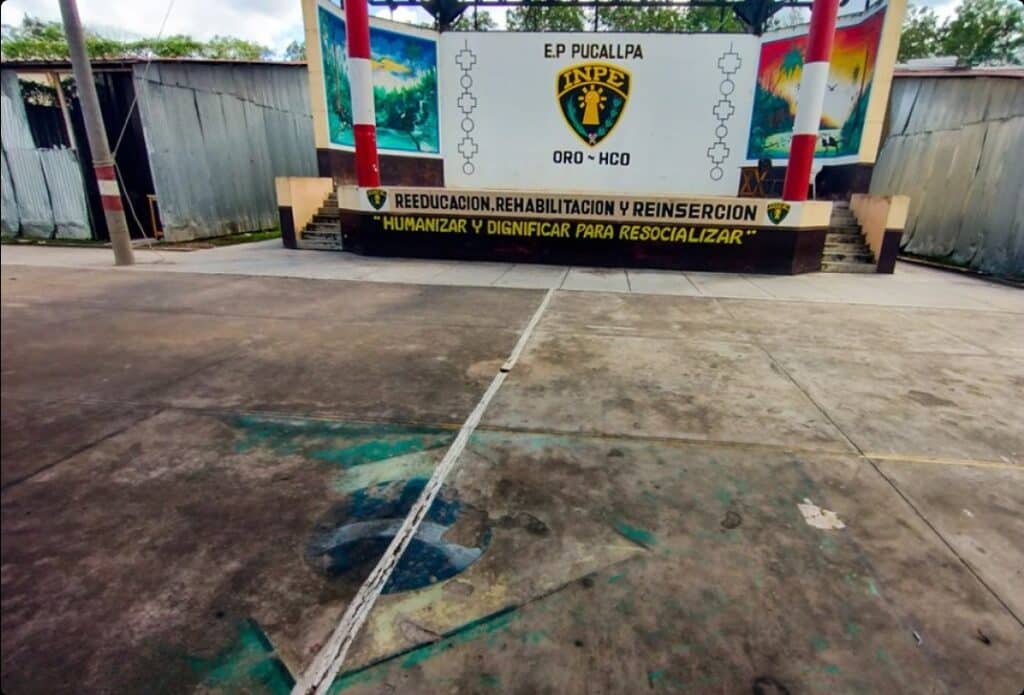
By Plan V* The Comandos de la Frontera, a Colombian armed group that also operates in northern Ecuador, and the Ecuadorian gang Los Choneros have imposed a regime of terror in the Amazonian provinces of Sucumbíos and Orellana, although the alliances between them are unclear. One of the illegal activities that has grown the most […]
Beneath the lush canopy of the world’s most biodiverse ecosystem, a darker reality lies hidden behind the natural splendor. A labyrinth of thousands of rivers allows criminal groups to move freely, while the dense forest cover enables them to evade detection.
The remoteness and lack of infrastructure cause a profound disconnect between Amazonian communities and capital cities. Historically neglected by their governments, entire regions and populations are left isolated and excluded.
Porous and difficult to control, borderlands are marked by an obscure convergence of guerrilla movements, criminal startups and multinational organized crime.
Armed groups, drug traffickers and illegal miners encroach on or invade protected areas and Indigenous territories. In some places, park guards have been forced to abandon their posts.
Some Indigenous communities rent their land for drug crops or mining. Those who resist risk assassination. Despite efforts to protect the Amazon and its Indigenous and traditional peoples, criminal groups have seized control of remote regions.
This is the Amazon underworld, where cycles of crime and destruction are fueled by a multibillion-dollar illegal trade in drugs, gold and arms.
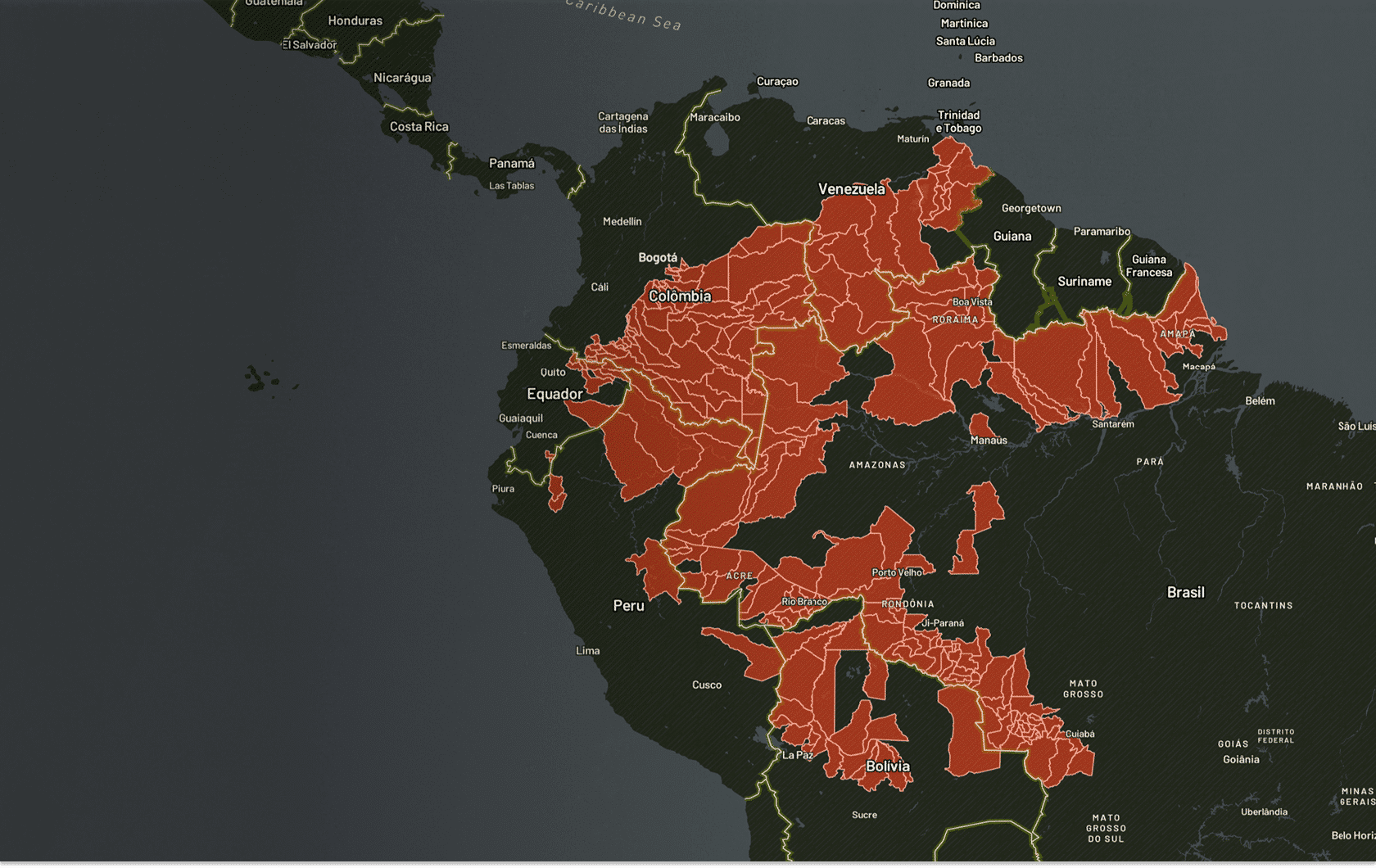
Presence of Armed Groups and Criminal Organizationst
We mapped the presence of crime syndicates and armed groups in the Amazonian border regions of Bolivia, Brazil, Colombia, Ecuador, Peru and Venezuela. Their presence was reported in 242 of the 348 municipalities (69.5%).
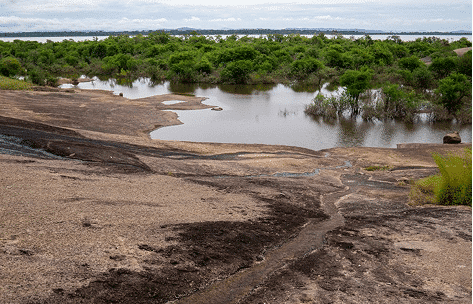
A SECRET ISLAND ON THE ORINOCO
Beneath the lush canopy of the world’s most biodiverse ecosystem, a darker reality lies hidden behind the natural splendor. A labyrinth of thousands of rivers allows criminal groups to move freely, while the dense forest cover enables them to evade detection.
The remoteness and lack of infrastructure cause a profound disconnect between Amazonian communities and capital cities. Historically neglected by their governments, entire regions and populations are left isolated and excluded.
Porous and difficult to control, borderlands are marked by an obscure convergence of guerrilla movements, criminal startups and multinational organized crime.
Armed groups, drug traffickers and illegal miners encroach on or invade protected areas and Indigenous territories. In some places, park guards have been forced to abandon their posts.
Some Indigenous communities rent their land for drug crops or mining. Those who resist risk assassination. Despite efforts to protect the Amazon and its Indigenous and traditional peoples, criminal groups have seized control of remote regions.
This is the Amazon underworld, where cycles of crime and destruction are fueled by a multibillion-dollar illegal trade in drugs, gold and arms.
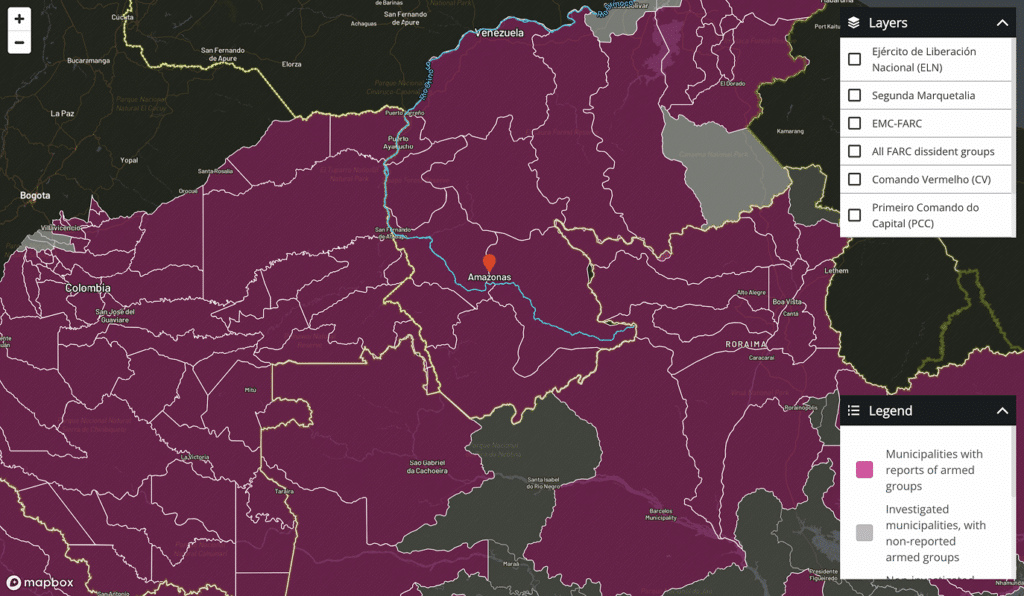
Presence of Organized Crime and Armed Groups
To build this database, we consulted primary sources and documents in all the Amazonian border municipalities of Brazil, Colombia, Venezuela, Peru, Ecuador and Bolivia.
On his trips down the Río Negro toward the Brazilian town of São Gabriel de Cachoeira, he would be accompanied by around eight guerrillas armed with automatic rifles and sometimes wearing uniforms and red bandanas and flying a red and black flag.
“Once I took a shipment of 530 kilos [1,168 pounds],” Eusebio says. “There was marihuana, cocaine and various types of merchandise.” Venezuelan security forces, he adds, never stopped them.
In Brazil, large crime syndicates take charge of the drugs, distributing to buyers throughout the country and exporting wholesale to Europe and Africa. But Eusebio says he never met with members of Brazilian drug gangs. Instead, he claims he handed the drugs over to rogue Brazilian law enforcement officials.
Before his boat reached São Gabriel de Cachoeira, three or four uniformed police officers would arrive, according to Eusebio. “They wait until dark to load it onto another boat,” he said.
Local media have reported on several cases of Brazilian law enforcement officials involved in drug trafficking in Amazonas. The region has seen a significant uptick in drug seizures and has become an important trafficking route since the COVID-19 pandemic.
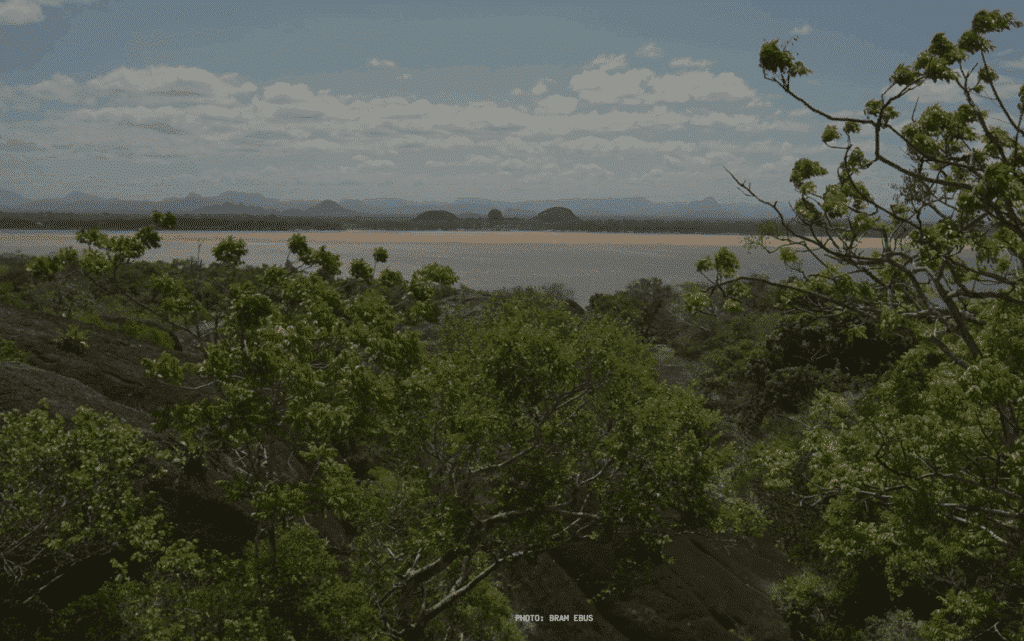
Presence of Armed Groups and Criminal Organizationst
Have long used the area to rest, move troops, hide kidnapping victims and receive medical care. After the signing of a peace deal with the Colombian government in 2016, dissident guerrilla groups began to increase their presence in the Venezuelan Amazon.
AUDIO-HISTORIA
Criminal groups target Yanomami territory
The vastness of the Amazon, spanning nearly 7 million square kilometers (2.7 million square miles) — twice the size of India — makes government control difficult. This enables well-funded criminal networks to operate freely, with resources exceeding those of state agencies charged with combating them.
Over the past year, our journalists have traveled to many of these borderlands, interviewing members of armed groups and the gold miners, drug runners, Indigenous people and others caught up in their world.
Over the past year, our journalists have traveled to many of these borderlands, interviewing members of armed groups and the gold miners, drug runners, Indigenous people and others caught up in their world.
GUERRILLA CAMPS A MIRAGE OF LUXURY
Beneath the lush canopy of the world’s most biodiverse ecosystem, a darker reality lies hidden behind the natural splendor. A labyrinth of thousands of rivers allows criminal groups to move freely, while the dense forest cover enables them to evade detection.
The remoteness and lack of infrastructure cause a profound disconnect between Amazonian communities and capital cities. Historically neglected by their governments, entire regions and populations are left isolated and excluded.
Porous and difficult to control, borderlands are marked by an obscure convergence of guerrilla movements, criminal startups and multinational organized crime.
Armed groups, drug traffickers and illegal miners encroach on or invade protected areas and Indigenous territories. In some places, park guards have been forced to abandon their posts.
Some Indigenous communities rent their land for drug crops or mining. Those who resist risk assassination. Despite efforts to protect the Amazon and its Indigenous and traditional peoples, criminal groups have seized control of remote regions.
This is the Amazon underworld, where cycles of crime and destruction are fueled by a multibillion-dollar illegal trade in drugs, gold and arms.
“It’s like a hotel. They have the best food there. They take it easy there, watching movies.”
— Eusebio, an Indigenous man that has worked for both FARC dissidents and the ELN
Beneath the lush canopy of the world’s most biodiverse ecosystem, a darker reality lies hidden behind the natural splendor. A labyrinth of thousands of rivers allows criminal groups to move freely, while the dense forest cover enables them to evade detection.
The remoteness and lack of infrastructure cause a profound disconnect between Amazonian communities and capital cities. Historically neglected by their governments, entire regions and populations are left isolated and excluded.
Porous and difficult to control, borderlands are marked by an obscure convergence of guerrilla movements, criminal startups and multinational organized crime.
Armed groups, drug traffickers and illegal miners encroach on or invade protected areas and Indigenous territories. In some places, park guards have been forced to abandon their posts.
Some Indigenous communities rent their land for drug crops or mining. Those who resist risk assassination. Despite efforts to protect the Amazon and its Indigenous and traditional peoples, criminal groups have seized control of remote regions.
This is the Amazon underworld, where cycles of crime and destruction are fueled by a multibillion-dollar illegal trade in drugs, gold and arms.
“In my community, you’d see little kids with wooden guns. From the smallest to the biggest, they carry their wooden guns, playing. I worked there out of need. That’s why I worked with them”
— Eusebio
“It’s like a hotel. They have the best food there. They take it easy there, watching movies.”
— Eusebio, an Indigenous man that has worked for both FARC dissidents and the ELN
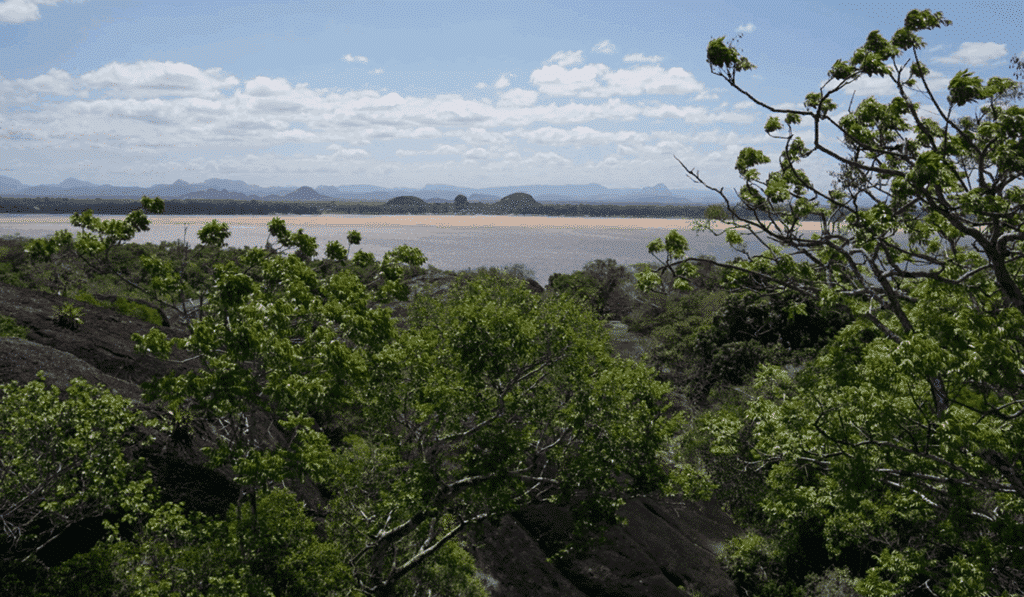
AT US$54 A GRAM,the price in Japurá, a smuggler or a dredge owner could be carrying the value of a middle-class apartment in Manaus in his pocket.
In 2019, concern about ELN and FARC involvement in illegal gold mining was a factor in the levying of sanctions by the U.S. Treasury Department. And in 2020, the U.S. Justice Department accused Maduro of conspiring with the FARC to “flood” the United States with cocaine. I
n Amazonas, the ELN, which currently is in peace talks with the administration of Colombian President Gustavo Petro, with the Venezuelan government as a guarantor, quickly increased in size. One FARC dissident faction, the Acacio Medina front, which never signed the 2016 peace deal between the Colombian government and the FARC and therefore did not demobilize, has a longer history in the Venezuelan Amazon.
Miners report paying protection money to Brazil’s Military Police
We spent one year investigating this intricate scenario and gaining insights into the forces that drive.
We spent one year investigating this intricate scenario and gaining insights into the forces that drive.
We spent one year investigating this intricate scenario and gaining insights into the forces that drive.
GUERRILLA CAMPS A MIRAGE OF LUXURY
Beneath the lush canopy of the world’s most biodiverse ecosystem, a darker reality lies hidden behind the natural splendor. A labyrinth of thousands of rivers allows criminal groups to move freely, while the dense forest cover enables them to evade detection. The remoteness and lack of infrastructure cause a profound disconnect between Amazonian communities and capital cities. Historically neglected by their governments, entire regions and populations are left isolated and excluded.
Traffickers bring cocaine into the vast state of Pará — which at 1.2 million square kilometers (more than 460,000 square miles)
IS MORE THAN 5 TIMES THE TOTAL LAND SIZE OF THE UNITED KINGDOM
— by river, highway or clandestine flights that have proliferated with an uptick in illegal mining in Pará and across Brazil’s Amazon in recent years
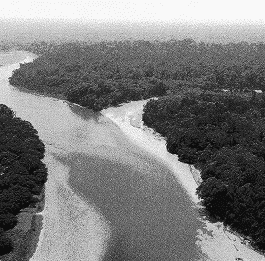
Drug route follows the Amazon River
Traffickers stockpile drugs at several points along the Colombia-Peru border, on the transportation route to Tabatinga, Brazil.
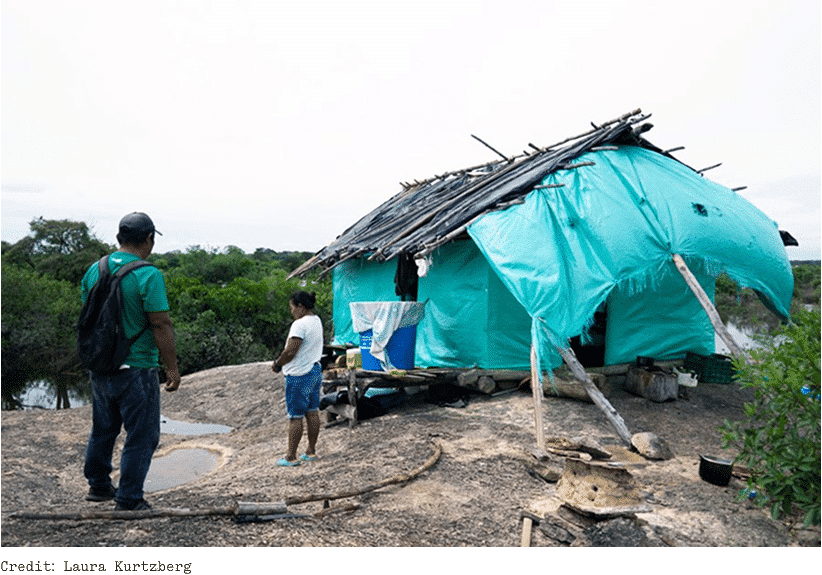
Bellavista is increasingly controlled by drug-trafficking groups. It is a community on the bank of the Callarú River, which is only navigable in the rainy season, and where soccer is a favorite activity of both men and women. Its plaza — an overgrown area with some stairs and arches — offers a view of spectacular Amazonian sunsets, a beauty that contrasts with the sight of armed outsiders drinking beer until they pass out. Strangers who are allowed to enter are followed and harassed with questions meant to intimidate. On March 21, a young victim of sexual exploitation was murdered and no one ever spoke up, one local resident says. People know who killed her, but no one will say anything, the person added, because “that’s what happens when you don’t play straight with a patrón.”
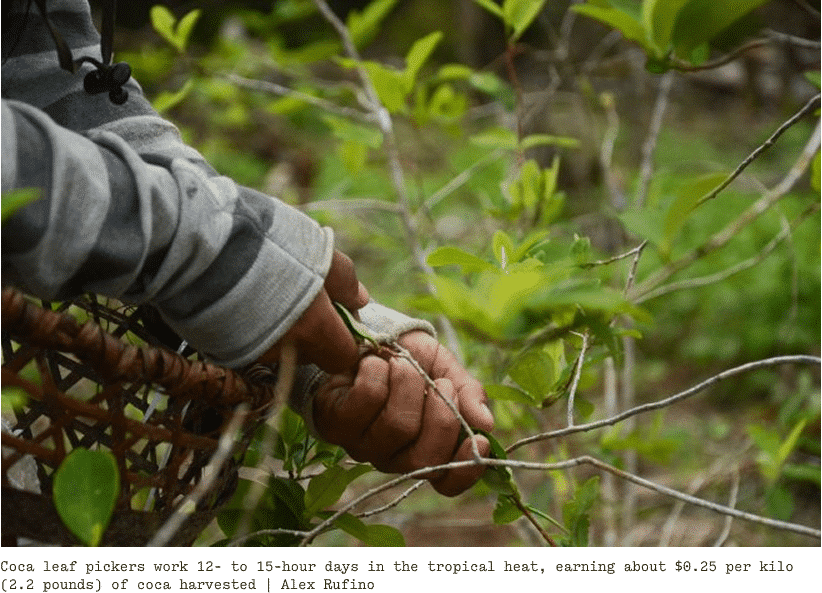
Bellavista is increasingly controlled by drug-trafficking groups. It is a community on the bank of the Callarú River, which is only navigable in the rainy season, and where soccer is a favorite activity of both men and women. Its plaza — an overgrown area with some stairs and arches — offers a view of spectacular Amazonian sunsets, a beauty that contrasts with the sight of armed outsiders drinking beer until they pass out. Strangers who are allowed to enter are followed and harassed with questions meant to intimidate. On March 21, a young victim of sexual exploitation was murdered and no one ever spoke up, one local resident says. People know who killed her, but no one will say anything, the person added, because “that’s what happens when you don’t play straight with a patrón.”
“In my community, you’d see little kids with wooden guns. From the smallest to the biggest, they carry their wooden guns, playing. I worked there out of need. That’s why I worked with them”
— Eusebio PHOTO: ALEX RUFINO
Bellavista is increasingly controlled by drug-trafficking groups. It is a community on the bank of the Callarú River, which is only navigable in the rainy season, and where soccer is a favorite activity of both men and women. Its plaza — an overgrown area with some stairs and arches — offers a view of spectacular Amazonian sunsets, a beauty that contrasts with the sight of armed outsiders drinking beer until they pass out. Strangers who are allowed to enter are followed and harassed with questions meant to intimidate. On March 21, a young victim of sexual exploitation was murdered and no one ever spoke up, one local resident says. People know who killed her, but no one will say anything, the person added, because “that’s what happens when you don’t play straight with a patrón.”
AUDIO-HISTORIA
Criminal groups target Yanomami territory
The vastness of the Amazon, spanning nearly 7 million square kilometers (2.7 million square miles) — twice the size of India — makes government control difficult. This enables well-funded criminal networks to operate freely, with resources exceeding those of state agencies charged with combating them.
Over the past year, our journalists have traveled to many of these borderlands, interviewing members of armed groups and the gold miners, drug runners, Indigenous people and others caught up in their world.