Operating within the ancestral territory, the Comando Vermelho vies for control alongside schools, health clinics, the local office of Brazil’s federal agency for Indigenous affairs (Funai), garimpeiros and militias, while controlling the machinery driving deforestation in Mato Grosso, a Brazilian state that borders Bolivia.
She was walking with her family near a gold mine known locally as “Six,” close to Cururu, Serra da Borda, one of the villages in the territory that is home to more than 200 Indigenous people from the Katitaurlu subgroup of the Nambikwara people. When she first saw the garimpeiro, he was already aiming at her from a distance, “with a red light, like a laser sight,” K. recounts.
Seeing that he was armed, the young woman hid in a pit. Several men chased after her, but she and her family managed to escape back to the village. “They wanted to kill her, they called her a criminal. But she wasn’t stealing anything, she was just walking, taking a stroll. There’s nowhere left for us to go. The real criminals are them, the ones invading our people’s land,” K. says.
“They wear masks. They carry 12-gauge shotguns, rifles, heavy weapons. I’ve seen them several times,” says K., 24, a resident of the Sararé Indigenous Territory in Mato Grosso, in southwestern Brazil, near the border with Bolivia. One afternoon in March, lying in a hammock while heating lunch over a campfire, she looked up toward the highlands, in the direction of the forest where the Cururu mine is located. The Comando Vermelho, one of Rio de Janeiro’s most powerful organized crime groups, controls the area. “Some are traffickers, others are members of the Comando Vermelho. Sometimes we run into them. I saw them this year. Sometimes they come and ask about someone. They always go to my father’s village armed, traveling along the road at night, hauling hydraulic excavators,” she adds.
K., who asked not to be identified for fear of reprisals, says the attack on the young woman took place in 2024, in a particularly dense part of the Sararé rainforest, which recorded more deforestation that year than any other Indigenous territory in Brazil. The garimpeiro, a foot soldier for the Comando Vermelho, pointed his rifle at his former sister-in-law, a young Indigenous woman.
The gold-rich region began to be exploited by the Portuguese as far back as the 18th century. It was later followed by loggers in search of mahogany and garimpeiros with engines, high-pressure water jets and hydraulic excavators, which engulf large stretches of rainforest in just a few hours.
According to the former head of environmental protection and current interim president of Brazil’s environmental protection agency (Ibama), Jair Schmitt, the gold rush in the region gained momentum from 2023 onwards, when the Lula administration carried out eviction operations targeting mining sites in other Indigenous territories in the country, such as the Yanomani in Roraima and the Kayapó in Pará. “Authorities are cracking down on mining operations, we’ve disrupted mining operations in the Kayapó and Yanomani territories, so more organized crime groups are trying to set up elsewhere,” he says. Like in Sararé.
Commissioner Éder Rocha, head of the Federal Police station in Cáceres – whose jurisdiction covers the gold mining area but which is located 300 kilometers from the site – holds a similar view. The station is responsible for investigating crimes committed in Sararé. “In response to intensified enforcement in the north, particularly in the Yanomani Territory, the garimpeiros started moving south and discovered gold here,” he says.
“Over the past three years, the business has taken off (…)
Before, you could see rainforest;
now you only see earth and mud.
It’s a scene of destruction.
There’s a huge amount of gold being extracted from there”.
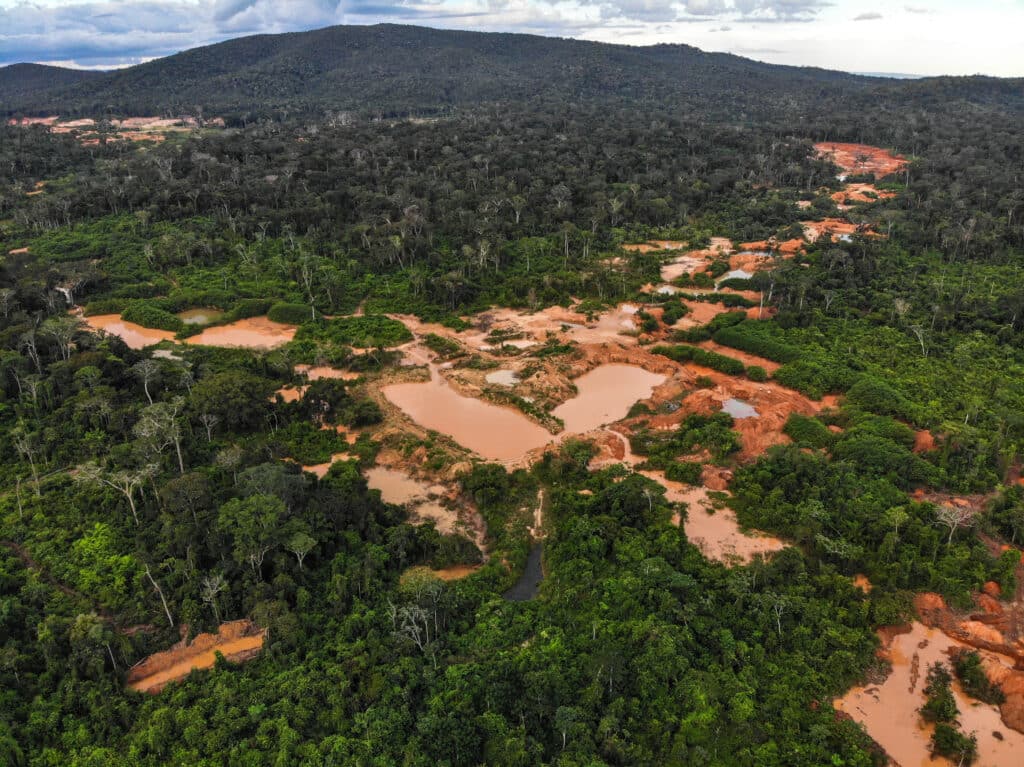
The use of heavy machinery to dig up rivers and forests in search of gold has had devastating environmental impacts.
Of the 67,000 hectares of the Sararé Indigenous Territory, 4,200 have been affected by illegal mining to date, according to the Brazilian government.
As Commissioner Rocha noted, the scale of the damage can be seen in satellite images and flyovers, such as the one conducted by InfoAmazonia in 2024.
Vast stretches of dense rainforests have been transformed into enormous mud-filled craters.
A local councilor in the municipality of Conquista D’Oeste, Sergio Beck, has worked as a teacher and religious missionary in the Sararé territory since 1998. He observed the mass arrival of miners in the region during enforcement operations in the Kayapó and Yanomani territories. “Machines poured into the area,” he says. Garimpeiros also flooded in. “There were real waves of them. One group arrived, then another suddenly followed, and the machines kept coming.” Beck says he has seen hydraulic excavators operating in the surrounding areas since at least the beginning of the Bolsonaro administration. Elected in 2018, former president Jair Bolsonaro – whose father, Percy Bolsonaro, mined gold in Serra Pelada, a major mining site in Pará in the 1980s – has defended mining on Indigenous lands.
At the Cururu mine – a stronghold of the Comando Vermelho, according to authorities – the impact is also felt underground. Miners dig tunnels up to 150 meters deep into the highlands. Once inside, the garimpeiros use dynamite and gel explosives to blast into the mountain and extract gold from the crushed rock.
Several companies are seeking authorization to explore and mine in the Sararé Indigenous Territory, including MT Borges Terraplanagem, which has applied to the National Mining Agency (ANM) for permission to operate in the area. The company is registered under the name of Wanderlan Borges Godoy, known as Mutum. In September 2022, he was accused of fatally shooting José Reginaldo Azevedo, known as Zezinho, after the two had been drinking alcohol together at the Cururu mine in the early hours of the morning.
By 2024, it was already clear that the destruction caused by illegal gold miners was spreading across large swathes of the Indigenous territory. Brazil’s National Institute for Space Research (INPE) recorded 2,865 hectares of deforestation within the demarcated territory that year – a figure 260% higher than the 11 hectares recorded four years earlier, in 2020.
Over the past six years, between 2020 and 2025, a total of 4,932 hectares of forest were cleared in the Sararé Indigenous Territory.
As reports emerged that the Comando Vermelho and other criminal groups – including a gang made up of military police officers – were stepping up their efforts to extract gold, environmental destruction also increased.
Comparison of satellite images showing the spread of illegal gold mining and environmental damage within the Sararé Indigenous Territory. Left: 2020. Right: 2026.
Armed faction versus militia
The municipalities of Pontes e Lacerda, Vila Bela da Santíssima Trindade, Nova Lacerda and Conquista D’Oeste – all of them close to the Sararé Indigenous Territory – are among 662 in the Amazon (67% of the total analyzed) that are affected by the presence of criminal factions and armed groups, according to the Amazon Underworld mapping, updated with data from six Amazonian countries through 2025.
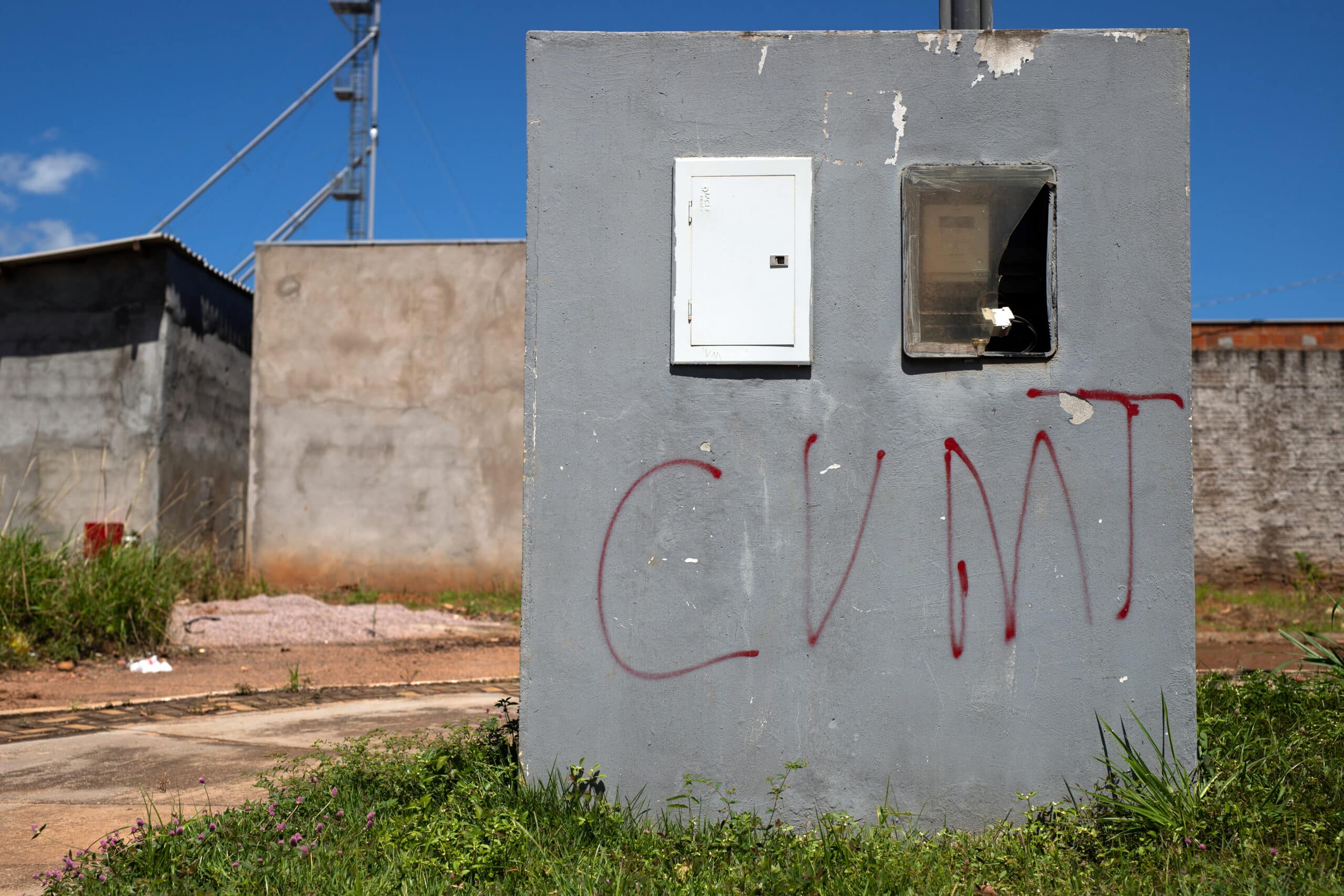
Rich in gold, these municipalities are now covered in cattle pastures and vast soybean fields. Large agribusiness landowners, including the Maggi and Sanches Tripolini families, own ranches along secondary roads leading to the gold deposits. The expansion of gold mining, present in the area since colonial times, is visible in the proliferation of equipment shops and gold-buying businesses, as well as laundry mats serving garimpeiros in the towns, which are typically painted with the insignia of the armed group that controls the region: CV.
Recent investigations by the Federal Police in Cáceres have revealed, for instance, that a captain of the Military Police of Pará was running a gold mine inside the Indigenous territory. Military police officers from Mato Grosso are also involved in illegal gold extraction. “The Comando Vermelho moved in and quickly pushed the Indigenous people aside, but when they tried to take the mines from the guys who were police officers, there was more resistance. That’s when violence escalated,” says Commissioner Rocha. “They struggled to confront the police officers who owned the mines.”
He says that many people die in the mines of the Sararé Indigenous Reserve. “The situation there is very violent. I’ve heard there is a cemetery near the mine. People are killed there,” the commissioner says. From time to time, bodies are dumped on the roadside so that police officers do not have to enter the mine to collect them. Some of the gold mining sites lie next to large rural properties used for soybean production, which can sometimes make police access difficult.
In Sararé, other illegal mining groups also operate, including “Boi na Brasa,” a family-run group from Itaituba in Pará. The group was previously involved in the restaurant business before moving into illegal gold mining, which Ibama inspectors consider the most sophisticated mining operation in the Amazon. Spread across the Brazilian Amazon, in Pará and Mato Grosso, the miners in this group are more efficient than any other faction, capable of extracting more gold in less time, according to a government official from Ibama.
Brazilian police and intelligence sources said there are ongoing investigations to determine where the gold extracted from Sararé ends up, with indications that it is being shipped to Bolivia and Venezuela, where it is laundered.
Within the upper ranks of Ibama, the expansion into the Amazon of factions originating in Brazil’s southeast, such as the CV, is seen as an entrenched practice. “In the Amazon, organized crime groups have a growing presence in artisanal mining areas,” says Jair Schmitt. Ibama inspectors notice this when they approach suspected illegal miners whose hands show no calluses, sometimes with traces of oil under their fingernails. These are often the hands of security guards working for the Comando Vermelho, with fingers sticky from the lubricant dripping off their rifles.
Police and officials interviewed for this report agree that the Comando Vermelho gradually established a foothold in the Sararé mines, first by selling drugs and then by providing security to illegal miners seeking to defend their areas from other miners, intruders and sometimes even the police. Today, the faction controls its own “mining pits,” as the Cacique Z, or Indigenous community leader, says. “About four years ago there was a surge in heavy weaponry,” he says. “You’d walk through the forest and hear engines running, see garimpeiros carrying guns. They’re not even miners, they’re members of the Comando Vermelho, which has taken over the territory.”
The two largest criminal groups in Brazil, the Comando Vermelho and the Primeiro Comando da Capital (PCC, which originated in São Paulo), are being closely monitored by U.S. authorities. On May 28, the Trump administration announced its decision to designate them as terrorist organizations, a move rejected by the Lula government, which called for respect for Brazil’s sovereignty.
In Sararé, the Cacique Z. says he has also seen members of the faction. “You see around thirty or forty soldiers. They call them ‘soldiers,’ right? You can hear gunshots,” he says. “The Comando saw that gold and set up a site just for themselves.” Now, he says, it is common to walk along forest trails and find the initials of the Rio-based faction carved into trees along the way: CV.
The paths lead to a growing number of gold mines: Cururu, Grota da Taca, Fofoquinha. These three are strongholds of the Comando Vermelho. Then there are Ten. Eight. Twelve. Fourteen. Six. Four. Three. The Cururu mine is the one expanding the fastest. Deep in the Serra da Borda, fugitives from the police are sheltering alongside traditional garimpeiros, according to Indigenous sources. There is also a small marijuana plantation there.
“I saw hooded people up there, sometimes wearing protection, bulletproof vests,” says G., an Indigenous leader who asked not to be identified and who has received death threats from illegal miners on more than one occasion. “They would move through the forest with machetes looking for places to mine for gold. We couldn’t do anything. If anyone tried to follow them, they would shoot at the trees just to scare you.” G. says he saw hooded miners several times at the Catorce mining site. “It frightens you, doesn’t it,” he says.
Fear also stems from a history marked by threats. In the 1990s, there were conflicts between the Nambikwara people and loggers. The patriarch of the Katitaurlu, Américo Katitaurlu, who has since passed away, spent much of his life limping after loggers tortured members of his community, beating them, calling them “pigs” and tying them to trees for days at a time, recounts councilor Sergio Beck. Later came threats from illegal gold miners seeking to exploit the forest’s riches.
At the Federal Police station in Cáceres, investigators once reviewed a wiretapped phone call in which an illegal gold miner claimed that a hydraulic excavator could produce 150,000 reais worth of gold per day (about $30,000), leaving a net profit of 80,000 reais (about $16,000) by the end of the day, the commissioner says. “He now owns three wheel loaders, each worth one million reais (about $200,000). The machinery operates 24 hours a day,” Rocha says. Not all illegal miners, however, have access to such resources, and some ultimately end up working for others.
In March, Orlean Maranhão, 39, spent 28 days in the Fofoquinha mine working for a man who had hired three other workers. He had to leave in a hurry due to a major federal eviction operation, led by the Brazilian government, an agency within the Office of the President’s Chief of Staff, which was underway as we spoke.
Sitting in the bus terminal in Pontes e Lacerda, he says: “Out of every twenty grams we extracted, I got a gram and a half. The rest went to the boss and the rest of the team.” He spent one gram in about 40 minutes with one of the sex workers at the mine and paid the equivalent of 50 reais ($10) for each bottle of beer. Many people, he adds, went into hiding around the mine. Food was buried there, a common practice among miners during enforcement operations, used to conceal supplies and prevent them from being destroying by the police.
In the first week of May, the federal government announced that 23 illegal mining camps had been discovered after a month of daily raids in the Sararé Indigenous Territory. The operation resulted in the seizure of 90,000 liters of diesel fuel, along with 190 generators, 441 mining engines and 971 kilograms of explosives.
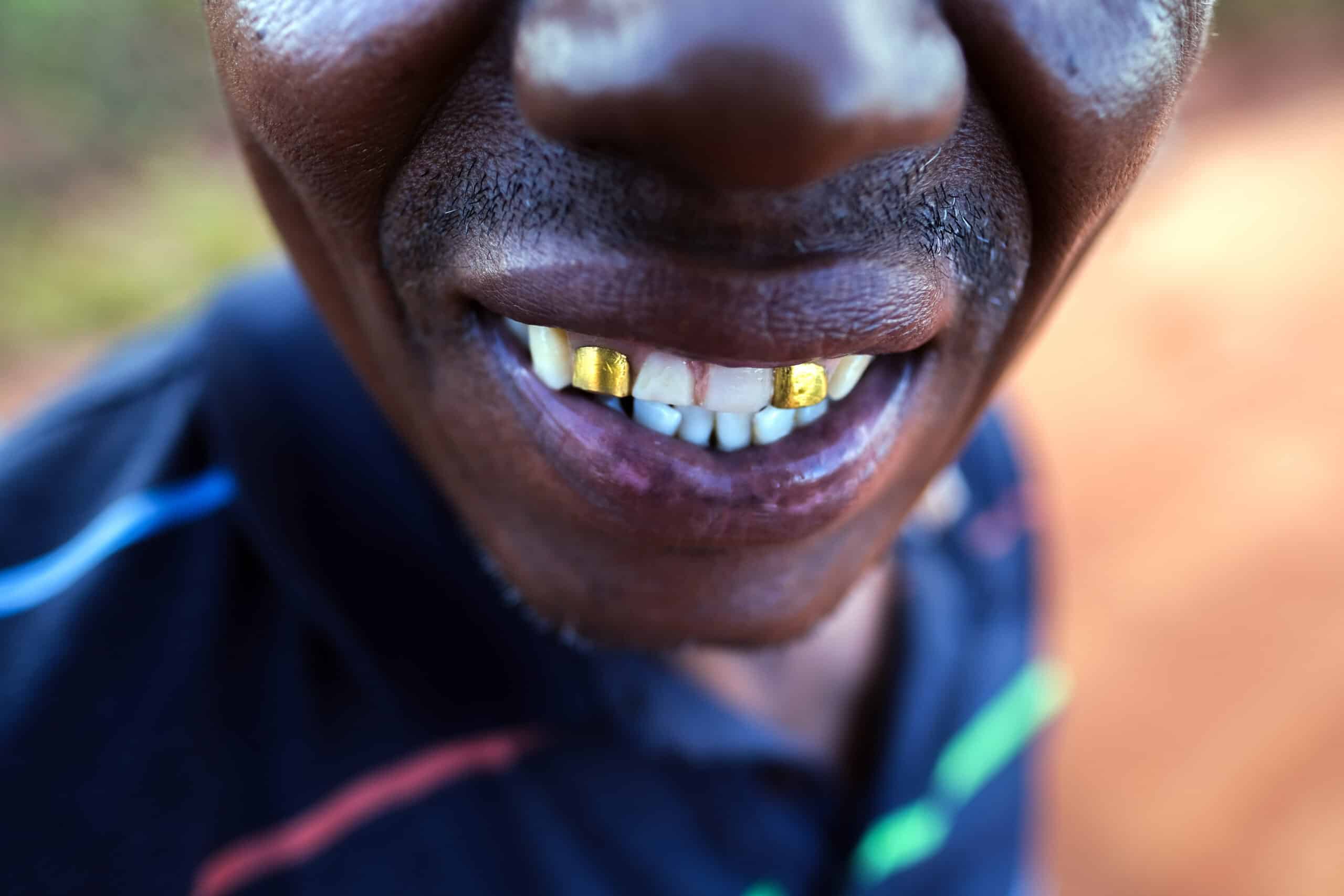
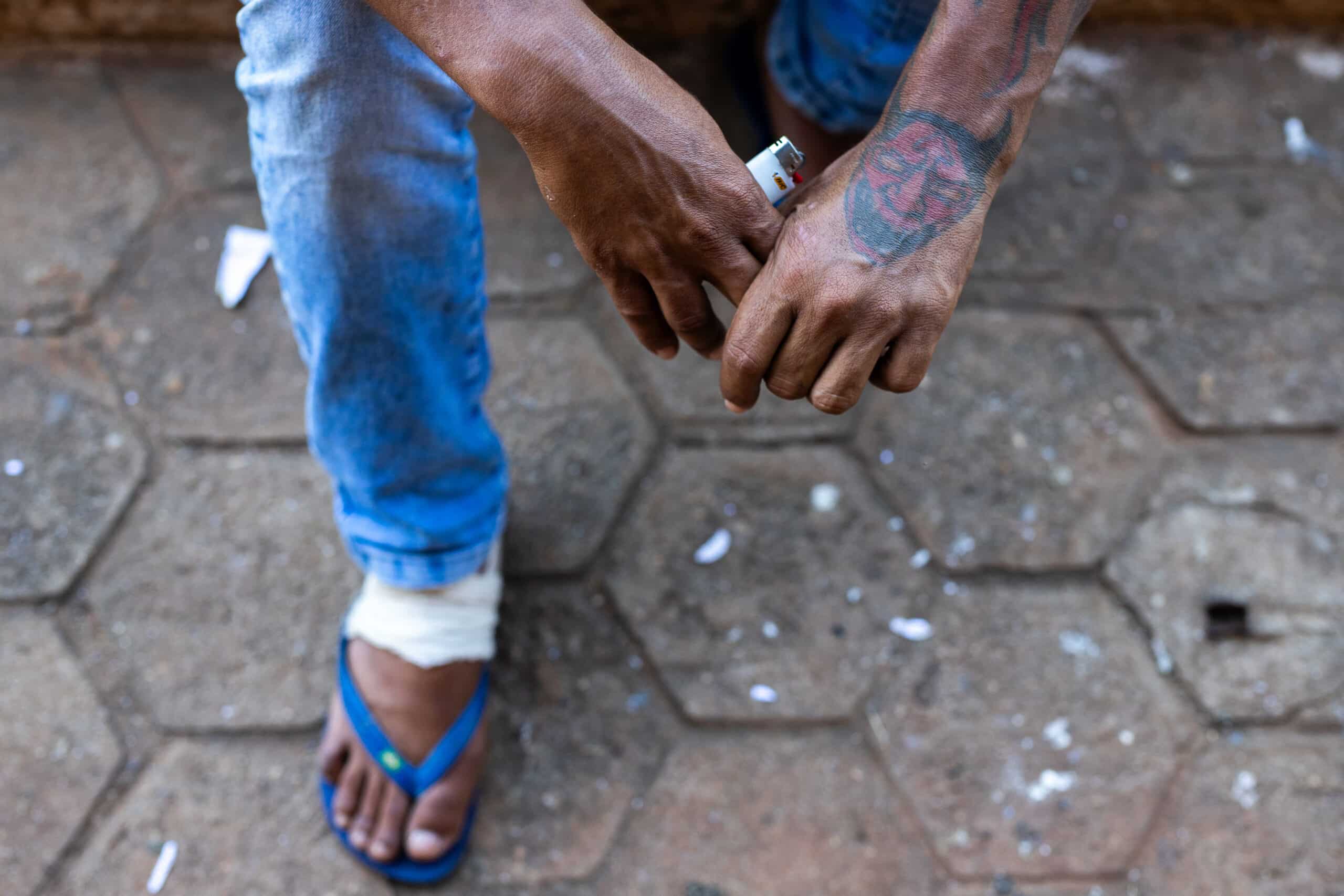
Following the operation, many illegal gold miners left the Sararé mines. Brazil’s National Public Security Force set up checkpoints around the Indigenous territory. At 6:00 a.m., 53-year-old Antonio Jorge, who has two gold teeth, explained to a police officer that his brother was still at the mine. “I came to pick him up,” he said. Nearby, a driver for Urbano Norte, a ride-hailing app operating in the region, says he charges 250 reais ($50) for a trip into town. Four passengers fit in the car, bringing the fare to 1,000 reais per trip. He says that just the day before, he had given a ride to four miners. According to an estimate by Indigenous leaders from the Katitaurlu Association, as many as 5,000 illegal miners had recently been living in the mines within their territory. On March 27, between 7:00 a.m. and 7:00 p.m., police at one of the checkpoints stopped 183 cars, 22 motorcycles, 14 trucks and 784 people.
Nilton Peres de Assis, 43, known as “Charada,” also made it to the bus terminal in Pontes e Lacerda with both feet injured while fleeing the police. The son of a gold prospector, he had spent 19 days at the Cururu mine. He left his gold – 27 grams, according to his account – buried near a tree at the mine. He is missing part of one ear, the result of a blow from a prison guard with the butt of a firearm while he was serving time for a triple homicide. “I killed, unfortunately. Three people. With a .40-caliber pistol. They had threatened me in Vilhena,” he says. In Cururu, Charada had hoped to work on his own, but he says the criminal faction threatened him. “The Comando Vermelho is there,” he says. “Those guys are trouble – they make life difficult for us. They’re already demanding extortion payments. Right now, they take 8 percent. But those pests keep raising it, before long it’ll be 20 percent. You get no peace. They’re always asking questions, always checking up on you. When it’s not the police, it’s the Comando Vermelho.”
Gunfire in the night
In October of last year, the Amazon unit of Brazil’s Federal Police (Damaz) intercepted a WhatsApp message sent by the Comando Vermelho in Mato Gross to garimpeiros in the Alta Floresta region, in the northern part of the state. The note demanded payments in gold and required miners to register with the criminal faction.
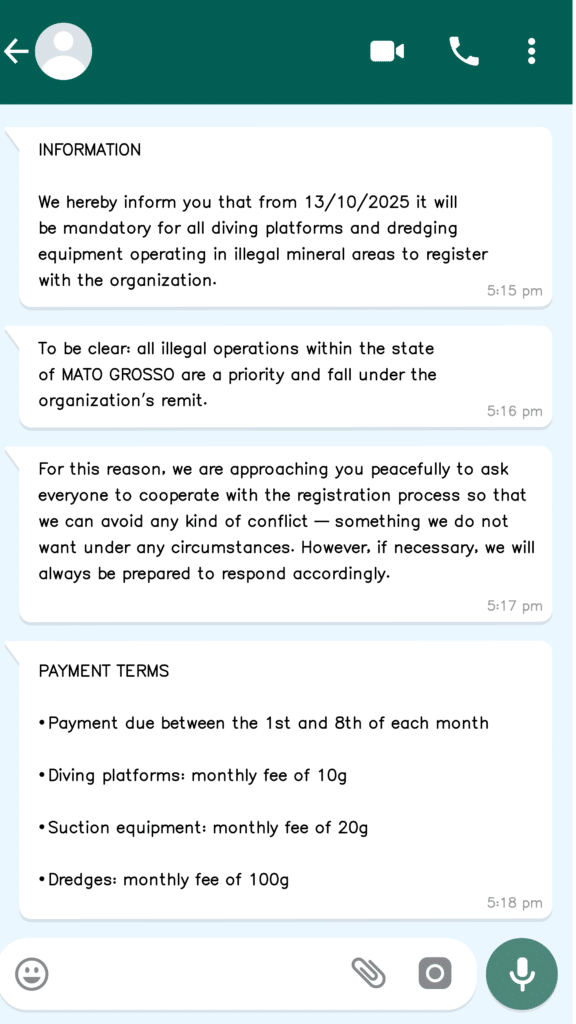
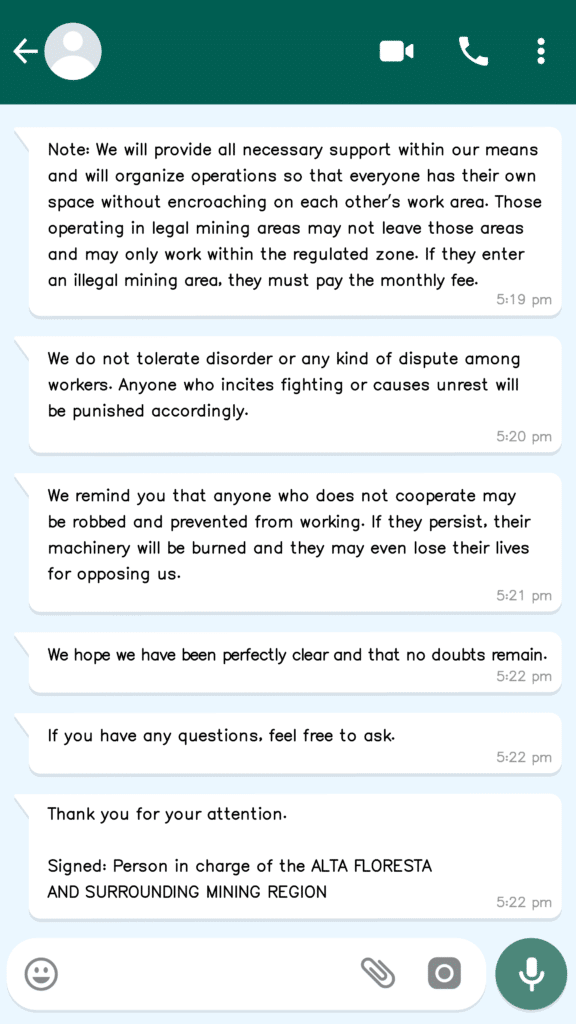
Illustration of a WhatsApp message sent by a member of the Comando Vermelho in Mato Grosso to illegal gold miners in the Alta Floresta region, in the northern part of the state, intercepted by Brazilian authorities.
“The Comando Vermelho has monopolized crime in the state, they say that everything illegal belongs to them,” said a Damaz agent who spoke on condition of anonymity. The Comando Vermelho is present in 139 of the 141 municipalities investigated by Amazon Underworld in Mato Grosso state in 2025.
The group’s modus operandi has instilled fear throughout the Sararé territory. “The Cururu mine began operating in 2019,” said teacher Y., who asked that her real name not be disclosed for security reasons. She lives and teaches in one of the villages near the mine.
Pointing to a rocky track on the hillside, she explained that this is the route used by illegal miners arriving from Cururu on their quadbikes. Every so often, Indigenous residents block the path with branches and logs to prevent intruders from entering, she said.
In 2019, she recalls, villagers began to hear loud music, dynamite blasts, engines and gunfire coming from the new mine. Seven years later, the noise has not abated. “We hear a lot of gunfire,” said S., sitting on an old chair surrounded by Indigenous women, while baby spider monkeys rest beside sleepy dogs on the dirt floor beneath a shelter made of açai palm thatch. “Gunshots are always heard. A lot of them. We hear them all the time.” The Katitaurlu Indigenous people sometimes play a game of identifying weapons by the sound of the shots. “Revolver. Shotgun. Rifle,” the teacher recounted.
“2024 was terrible. They got very close,” she said. Then, in November 2025, while working in a cornfield within the Sararé Territory, the women from the village once again heard gunfire. “Very close to us. The macaws started screaming.” “You can’t move around freely anymore, you have to move carefully, constantly watching for garimpeiros. The women hide, they have their own ways of moving around without making any noise. Whenever they go out, they have to be extremely careful.” S. paused. “In fact, just last night I heard gunshots,” she said.
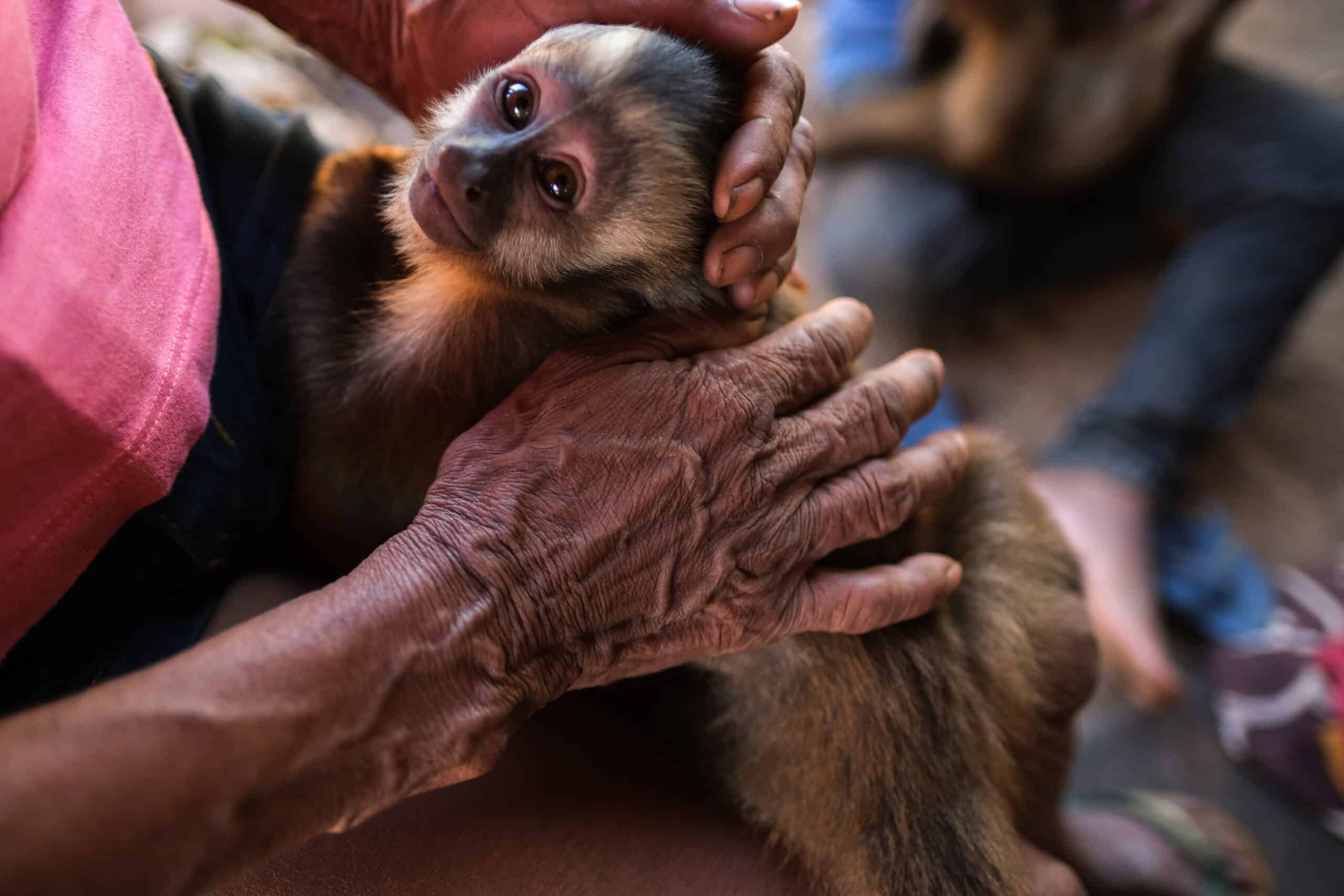
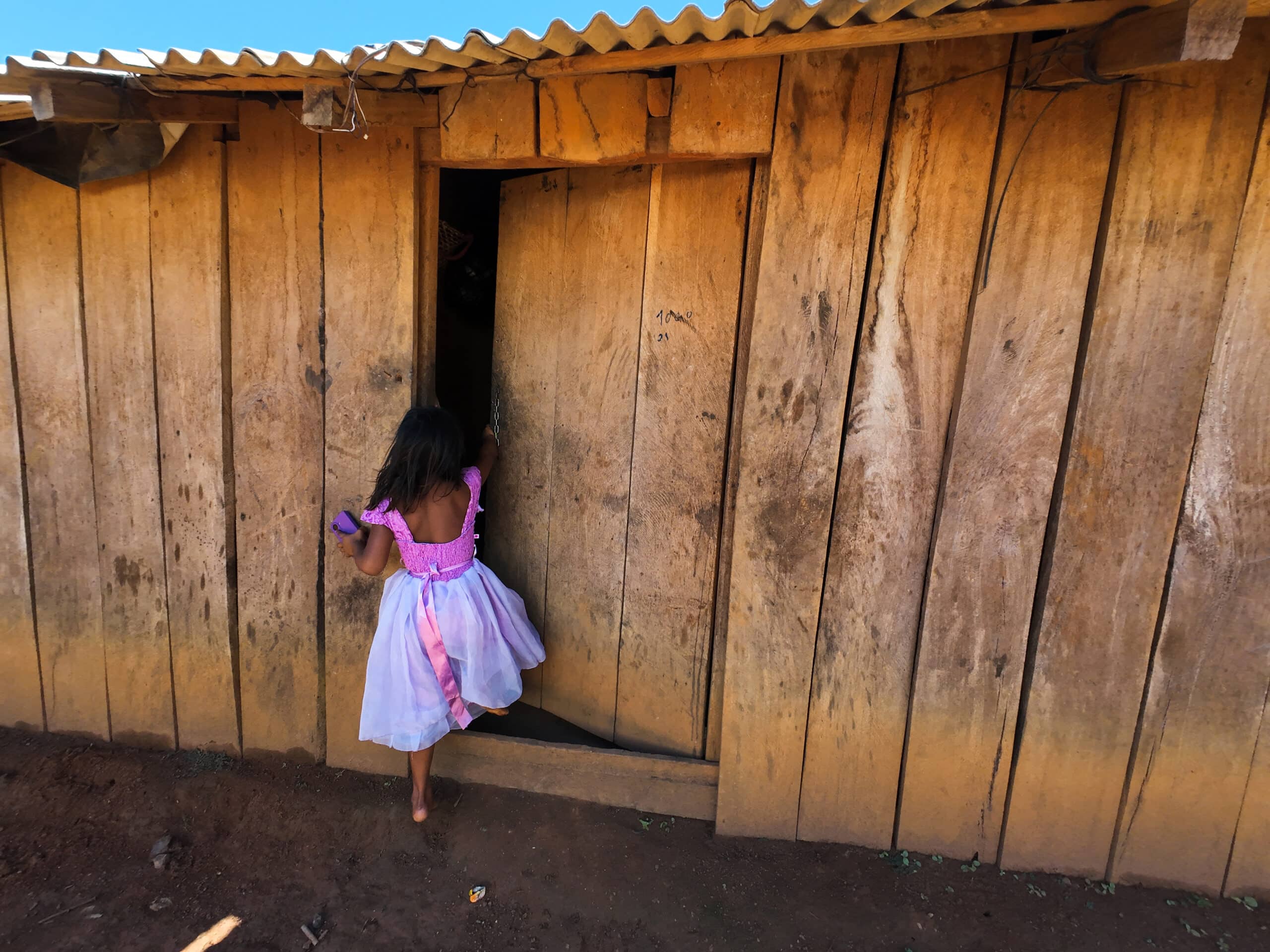
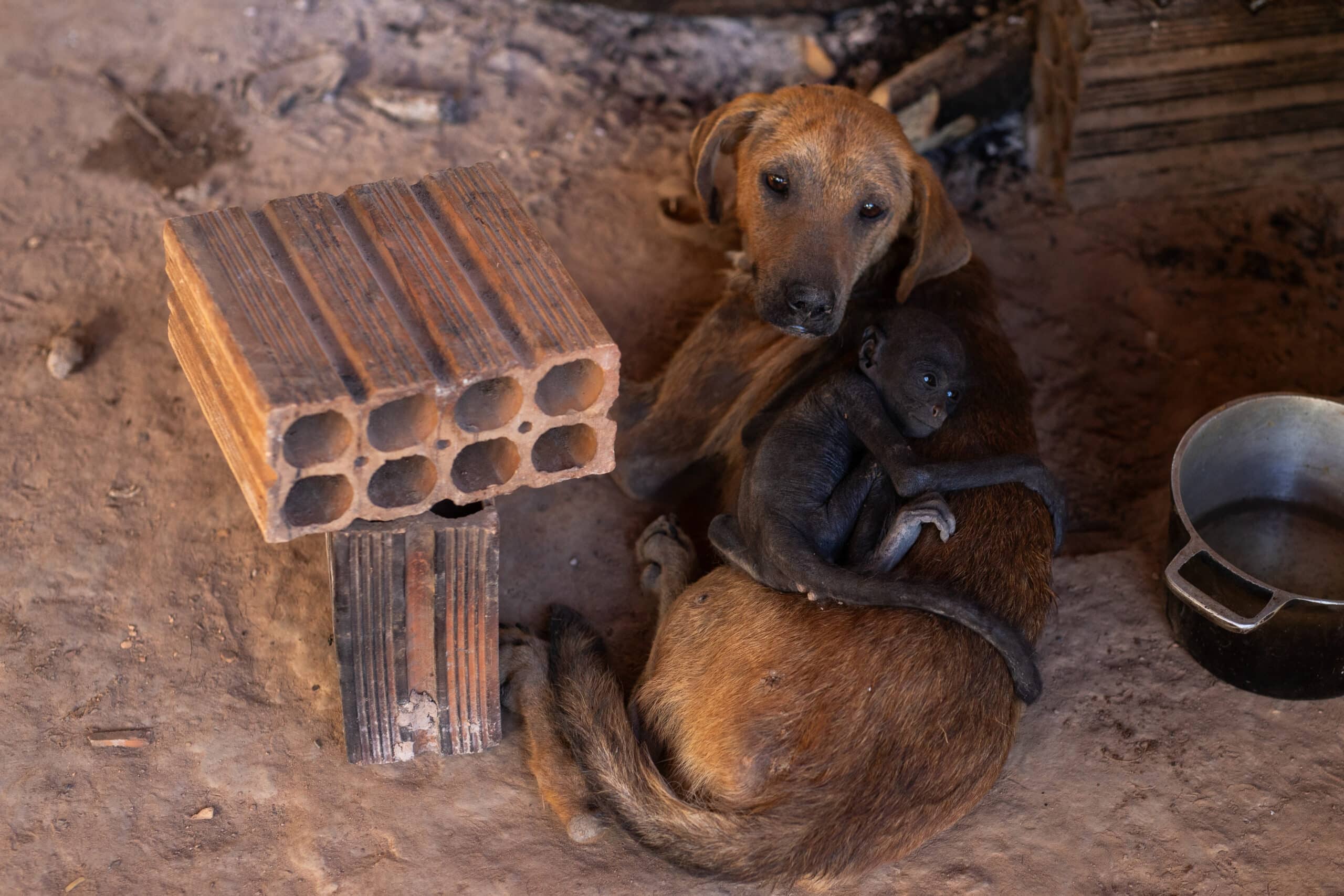
On this occasion, however, the gunfire may have come from helicopters carrying agents of the Federal Highway Police (PRF) participating in a large-scale operation, who were firing into the trees from the air to drive people out of the mines.
Mega-operation
With the support of the army, the large-scale operation had arrested 81 garimpeiros by March 30. Most were released during custody hearings or paid bail, according to the Federal Police in Pontes e Lacerda. Days before it was launched, the eviction operation was announced on social media. On TikTok, videos multiplied showing army tents in place. “They find out through the radio when the inspection is coming,” said a Brazilian public defender, who spoke on condition of anonymity.
The central task force for the expulsion of intruders, led by the head of the Brazilian government, Nilton Tubino, was set up at the São Francisco mining company, located next to the mines inside the Sararé Indigenous Territory. The company, which is engaged in gold mining, belongs to the Torres family, whose patriarch, Wanderly Facheti Torres, is a business partner of Mato Grosso governor Mauro Mendes, of União Brasil, an opposition party to the Lula government.
Mendes, in turn, is a partner in Maney Participações with Valdinei Mauro de Souza, known as Nei Garimpeiro, one of the financiers of Jair Bolsonaro’s electoral campaigns. A billionaire and airport owner, de Sousa was investigated for allegedly purchasing more than 300 kilos of mercury from smugglers. The case remains unresolved. Maney Participações is a joint venture between Wanderley Torres and Valdinei de Souza in the company Mineração Tirirical, registered along the Transgarimpeira highway in Itaituba.
Mauro Mendes recently left the state government to run for a Senate seat in the October elections. In Congress, several bills are under discussion to regulate mining on Indigenous lands. In April 2025, the president of the Senate, Davi Alcolumbre, created a working group to study the issue. At the Federal Supreme Court, Justice Flávio Dino set a two-year deadline for Congress to regulate mining exploration and extraction in these territories.
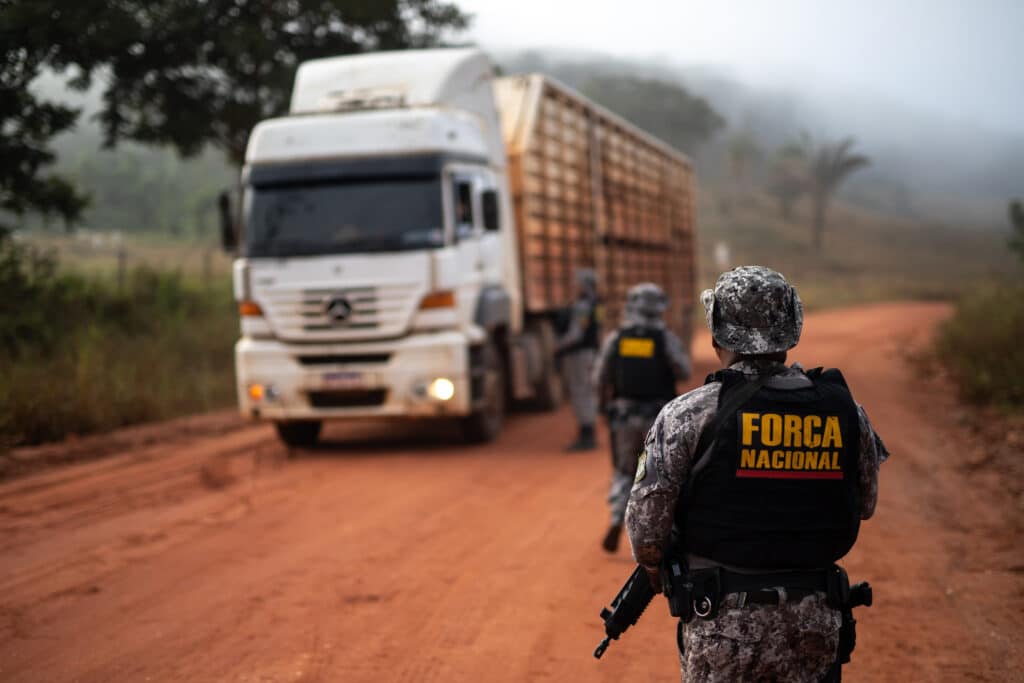
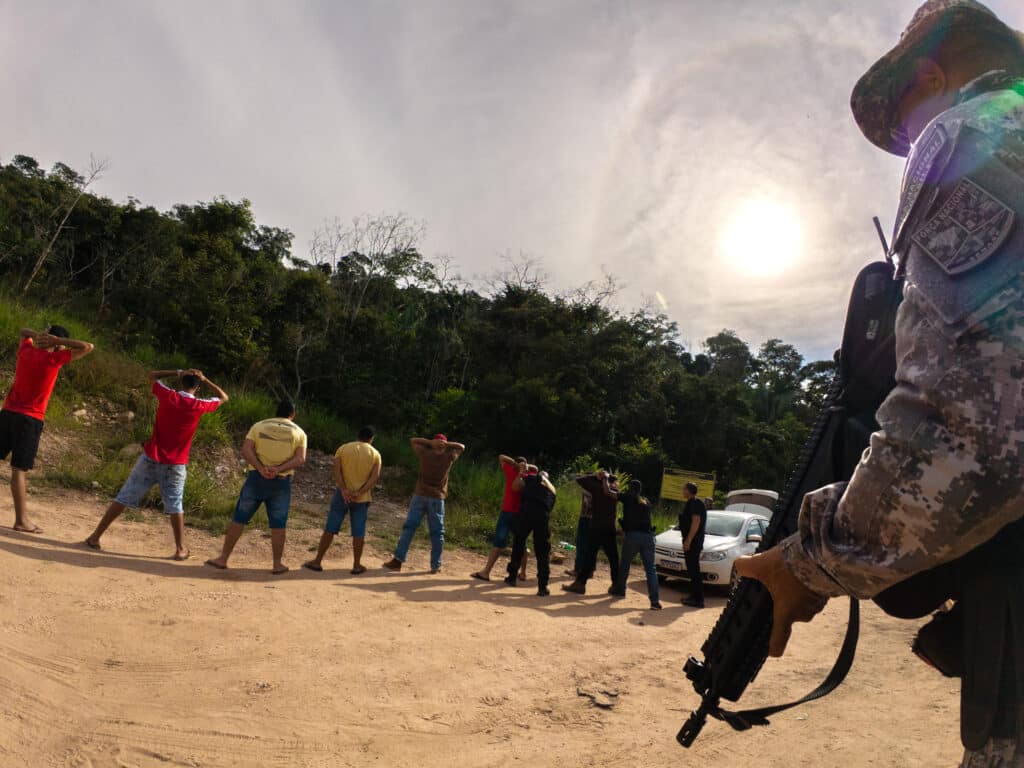
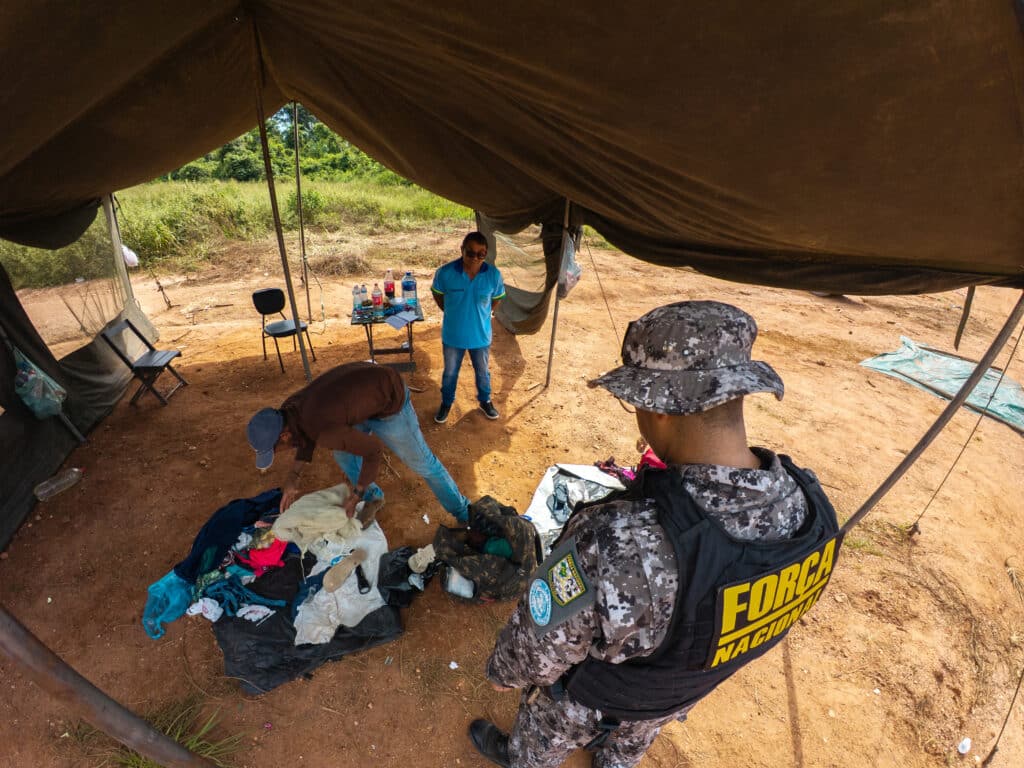
Pedestrians, including illegal gold miners, sex workers, taxi drivers, ride-hailing drivers, truckers and ranchers are stopped at a National Force checkpoint in the Sararé Indigenous Territory, in Pontes e Lacerda, on the main access road to the mine.
One March afternoon, while patrolling a secondary road alongside officers from Brazil’s National Public Security Force, the coordinator of the large-scale operation, Nilton Tubino, told Amazon Underworld that four helicopters had been flying over the Indigenous reserve daily that week.
“These helicopters pass by all the time, we could hardly hold classes because of them. They fly very low and the children got very nervous,” says teacher S. However, the disturbance caused by the helicopters cannot compared with the disruption mining has brought over the past few years.
S. says that outdoor classes with children — collecting fruit and learning about the forest — had to be suspended. Hunting, fishing and the once-abundant gathering of honey and materials for craftwork no longer exist. The water of the Sararé river and its tributaries, once clear and blue, are now muddy and murky. The reeds used to make bows and arrows are gone. The Katitaurlu women can no longer find babaçu palm fibre to weave the baskets used to carry cassava at harvest time. “We’d go out to hunt and come across garimpeiros armed with rifles,” says cacique G. Marriages in the villages have broken down because outsiders brought women in from elsewhere, disrupting relationships, says student K.
The drugs and alcohol supplied to young indigenous people have become a serious problem. “Right now, the teacher is there without a single secondary school student,” says teacher S. at the village. “Some leave, others go to the mines, drink cachaça. Some days they come, some days they don’t.” In August 2024, an indigenous student suffered an overdose and died in the Serra da Borda village. On another occasion, the village nurse pumped the stomachs of two girls and managed to prevent them from dying the same way. “Sometimes they put poison in the drink. They sell drugs,” says K.
Between 2019 and 2023, 105 homicides were recorded in Pontes e Lacerda, the largest municipality near the Sararé territory. Seventy-four of them (70% of the total) involved firearms.
Due to the violence, some young teenagers from the Nambikwara community began painting their entire bodies black from head to toe with genipap — the fruit of the jenipapo tree — and venturing into the gold mines. “They go wearing only their underwear, painted all over, with only their eyes and mouths showing,” says a leader who asked not to be identified.
In October last year, when a shootout between Ibama officers and garimpeiros broke out at the Cururu mine, the teenagers watched from nearby. Having spent so much time observing the mines, they knew exactly which huts the weapons were hidden in. As the garimpeiros fled, they left rifles and shotguns behind. The young men picked up the weapons and hid them in the forest. “What does an Indigenous person think? I’m going to take those weapons. If they come onto our land, we’ll attack them too,” says cacique Z., whom Funai asked for help in locating the weapons. “Now the police are constantly patrolling here because of those weapons. I don’t know if they belong to the Comando Vermelho or to the garimpeiros.”
*All initials correspond to names that have been replaced to protect the identity of sources for security reasons.