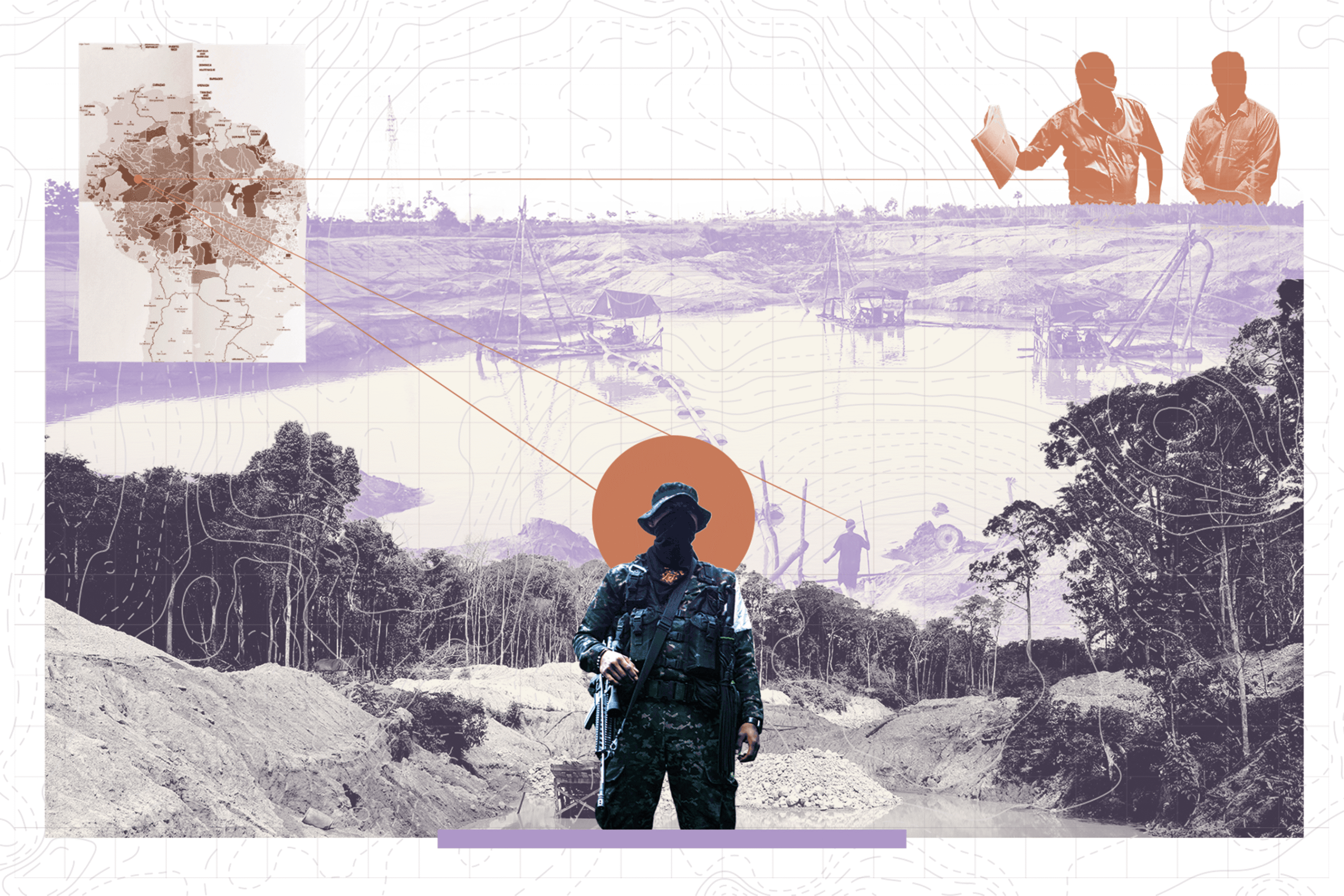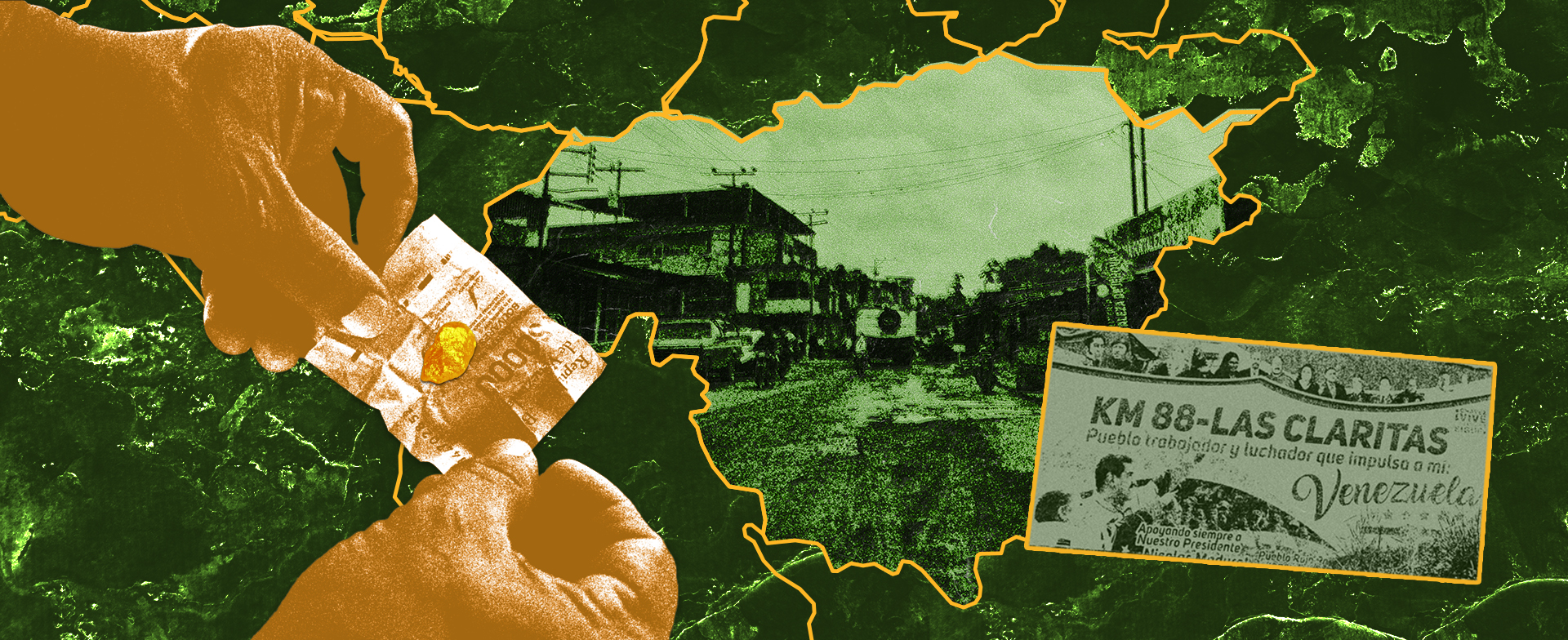
The joint military operation last June between U.S. and Venezuelan forces raised high hopes in southeastern Bolívar state, a gold-mining region that had, until then, been under the control of criminal gangs. Subsequent events, however, fell short of those expectations. Today, residents of the Las Claritas and Kilómetro 88 mining settlements, where the Tren de Aragua gang had entrenched itself, feel little real improvement. Some have already begun to long for the old order imposed by the "pranes", the prison-gang leaders that ran the mines, who are still around.
This is the first installment in a series produced by Armando.info and Amazon Underworld that, from the depths of southern Venezuela, documents the struggles for territorial control, resource extraction, and the effects on those who live near one of the largest gold deposits in the world.
In the mining zones of southern Venezuela there are signs of a new scenario, but residents take it for granted that criminal gangs still control the region.
Las Claritas and Kilómetro 88 are today a small-scale replica of what is happening at the national level: A bombing raid; the fall of a former leader; the promise of a better future; binational announcements; an economy that never quite takes off; eroding hope.
It takes only a conversation with any local resident to gauge the prevailing mood. “This is exactly what you see. It’s a calamity,” says one resident, a bus dispatcher. “We should have a two-lane avenue here to give the impression that we’re an established town but, forgive my language, we’re walking through shit water.”
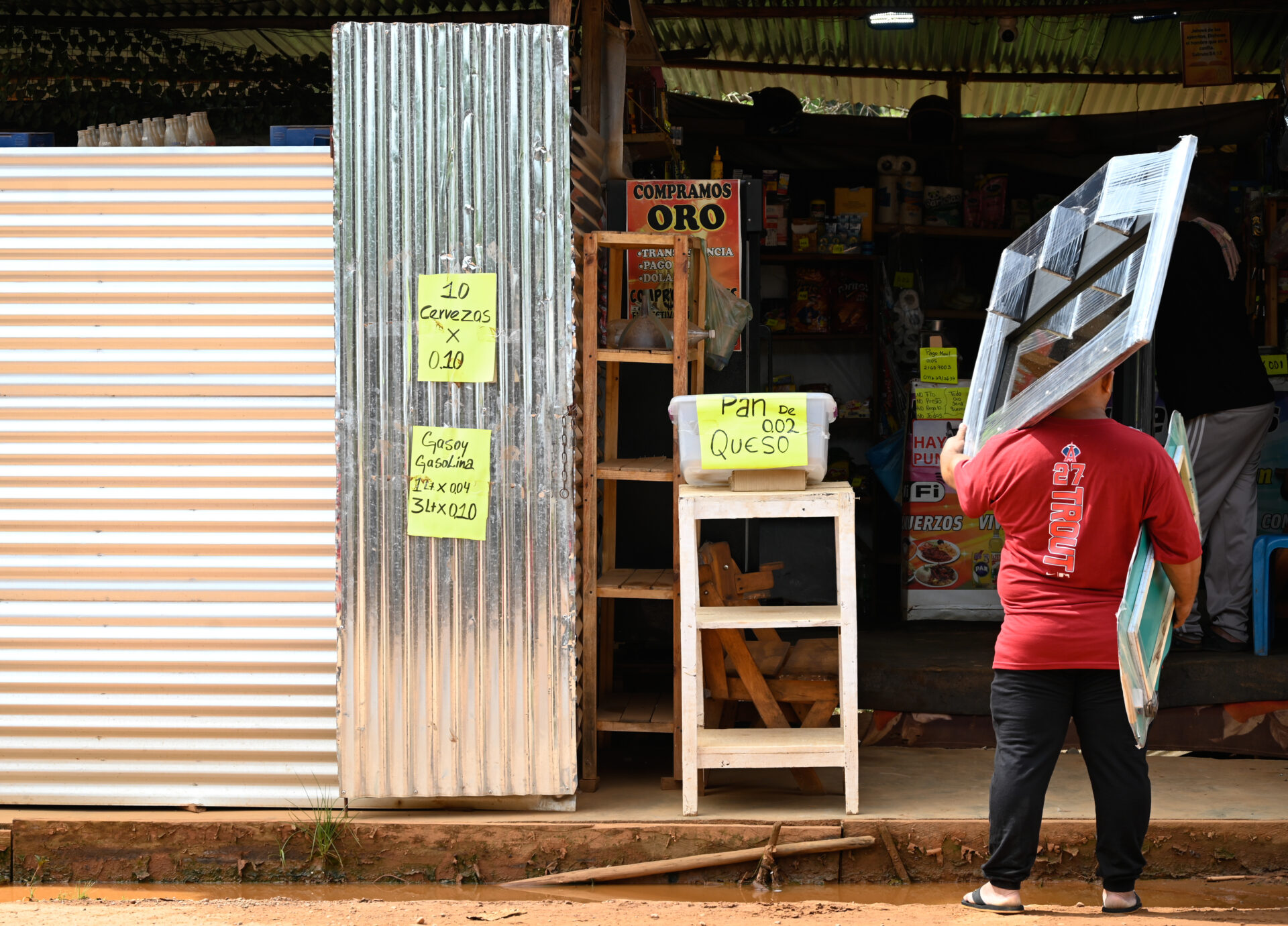
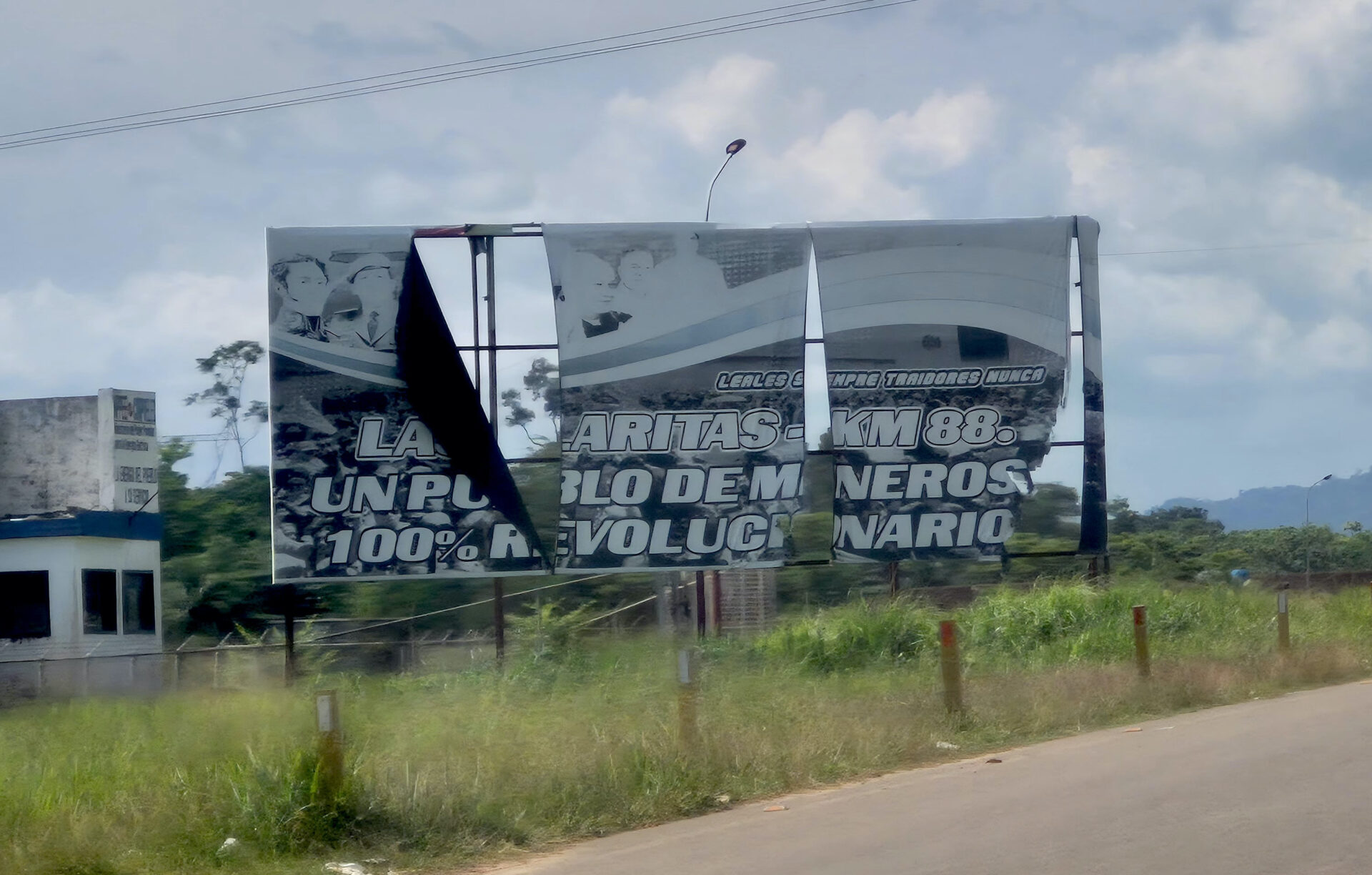
Traveling along the dusty, cracked main street that runs through Las Claritas and Kilómetro 88, two gold-mining zones in the Sifontes municipality of Bolívar state, everything looks subdued. The thugs of “El Sistema” no longer ride around on their motorcycles, deliberately flaunting walkie-talkies, rifles, or pistols to assert their power.
Nor is there any longer a need to keep up with extortion payments — the so-called “vacunas” (vaccines) which weren’t always paid in gold or hard currency, but ran to thousands of dollars a month. Many storefronts keep their rolling metal shutters, known locally as “santamarías,” closed. In the gold pawn shops that remain open, few customers are seen. The owners spend more time staring at their phones than weighing precious metal.
“That’s because of how hard the extortion racket hit merchants. Unlike other towns, the ‘El Sistema’ people in Las Claritas didn’t let any business exist without paying the vacuna,” says one local who, like most people interviewed, preferred not to give his name. “Everything’s calmer since they left,” he says, referring to the departure of those who ran things until the June 9 military operation.

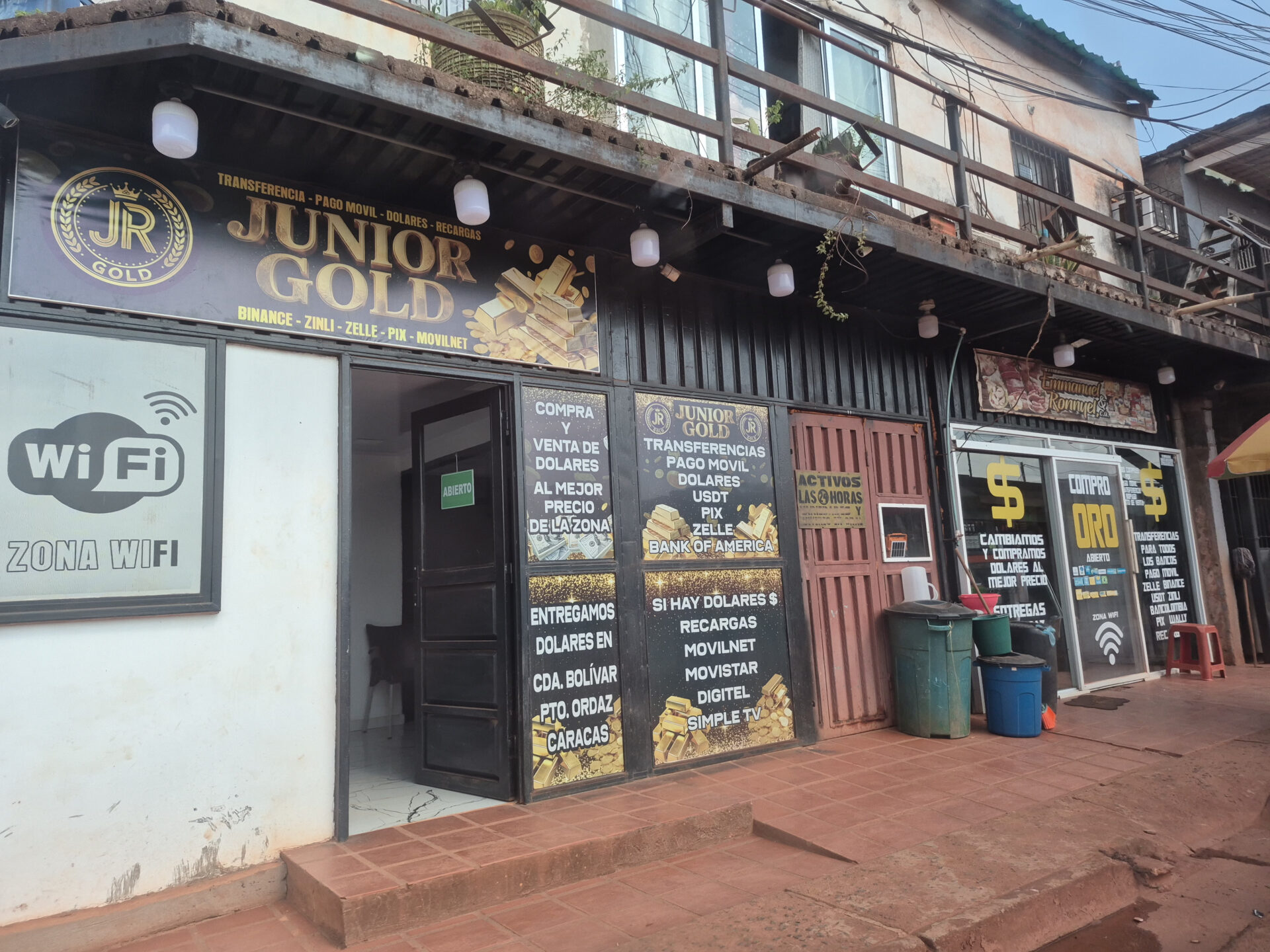
The name “El Sistema” is no accident — it reflects how the armed group functions as a system of criminal governance, an alliance among organized crime, political power, and security forces.
Las Claritas, a mining hub in the Cuyuní River’s traditional gold-bearing basin and part of the Orinoco Mining Arc that Nicolás Maduro created by decree in February 2016, was stormed by US Southern Command forces. Their aim was to kill Héctor Rusthenford Guerrero Flores, alias “Niño Guerrero”, leader of the Tren de Aragua, which the US State Department designated a foreign terrorist organisation in 2025.
The same day, the regime of acting president Delcy Rodríguez issued a statement confirming the news and describing it as “a combined operation between security agencies of Venezuela and the United States” that had relied on “specialized technological support”.
If Washington had put a price on Guerrero’s head, his elimination sounded like a trumpet of liberation across mining southeastern Bolívar, the state bordering Guyana and Brazil where he had built his stronghold. June 9 also brought a social eruption tinged with score-settling: the strike that killed “Niño Guerrero” and sent other leaders fleeing became a release valve for long-suppressed resentments and appetites.
No security cameras, no light bulbs; most of the outlets have been ripped out. An imposing grey wall of mosaic tile, with iron gates and a marquee entrance, surrounds this property on a hidden dirt street in Kilómetro 88. At first glance it looks like a bunker, but it is the den of Gabriel Rivas Núñez, known as “El Negro Juancho” or simply “Juancho”, now hastily abandoned and looted.
The hideout of another feared “pran” met a similar fate: that of Humberto Martes, known as “Humbertico”, heir to his namesake father, “El Viejo”. The doors of the sleek, modern three-storey mansion, clad in marble and limestone slabs, with narrow slit windows and a lookout tower, were torn down in the looting that followed the June 9 military operation. Of the luxuries “Humbertico” had flaunted behind that wall and shamelessly on social media (a pool, a sauna, a nightclub, a small zoo, a cockfighting pit), only two things survived: a diamond and a dollar sign, both etched into the granite floor of the entrance.
[Learn more about the players in Las Claritas’ criminal power structure]
CURSED GOLD, BLESSED BUSINESS
Las Claritas and Kilómetro 88 very likely have the country’s largest concentration of religiously named businesses. The signs vary in design but not in devotional intensity: God’s Blessing, The Blood of Christ Has Power, God’s Fortress, God’s Grace, Christ Lives. The trade makes no difference: gold dealers, hotels, restaurants, hardware stores, fruit and vegetable stands, bakeries and barbershops all carry such names.
But here the commandments were imposed by “El Sistema,” not the church.
That criminal system kept small-time, unorganised crime in check. Residents share a paradoxical view: relieved at the apparent end of an intimidating extortion regime, they also report the return of robberies and petty theft, whose temporary disappearance had let Las Claritas and Kilómetro 88 boast of being “the safest towns in Venezuela”. Mafia lawlessness had become law, guaranteeing a peace both tense and fragile.
Payment was mandatory and had to be on time, says a merchant on the main Troncal 10 road, whether in cash, gold or goods. “They also charged us in food. It happened occasionally — sometimes twice a week, for example, we’d have to prepare a hundred meals for their events,” he says. He therefore argues that the group’s apparent elimination “is the best thing for merchants”. But, he admits, insecurity has since risen. “You have to stay on guard. Before, there were no robberies or assaults. You could leave your phone lying there and it would still be there at the end of the day.”
Another merchant, a baker, backs him up: “Right now, we have no security. What kept this place [safe] was ‘El Sistema,'” he almost shouts over the roar of the generator powering his shop, apparently unconcerned about being overheard.
A religious figure, also unnamed for security reasons, admits: “I felt safer here [in the mining settlement] than in the city itself. Their control [‘El Sistema’s’] was security.” He explains: “Before, there was a system that ran the town. To set up a business, they were the filter. They managed the situation. If I sold cheese, they controlled the cheese. Everything had to go through them. What’s happened now is that people don’t have that control anymore.” He calls the current situation “delicate”, fertile ground for nostalgia over the lost order. He insists that the stronger military presence in the mines “is, on the contrary, something that brings conflict and a lot of problems.”
According to accounts gathered for this report, after the criminal bosses and their lieutenants fled, soldiers began collecting the customary toll at the mines, beyond the impassable rope barrier, taking a steeper cut than the mining union once did. The resulting tension among labourers, mill operators and machine owners prompted the communal councils of Las Claritas and Kilómetro 88, themselves co-opted by the unions, to put it to a community vote: should “Juancho” and “Humbertico” return? The verdict: bring them back.
“EL SISTEMA” PREVAILS
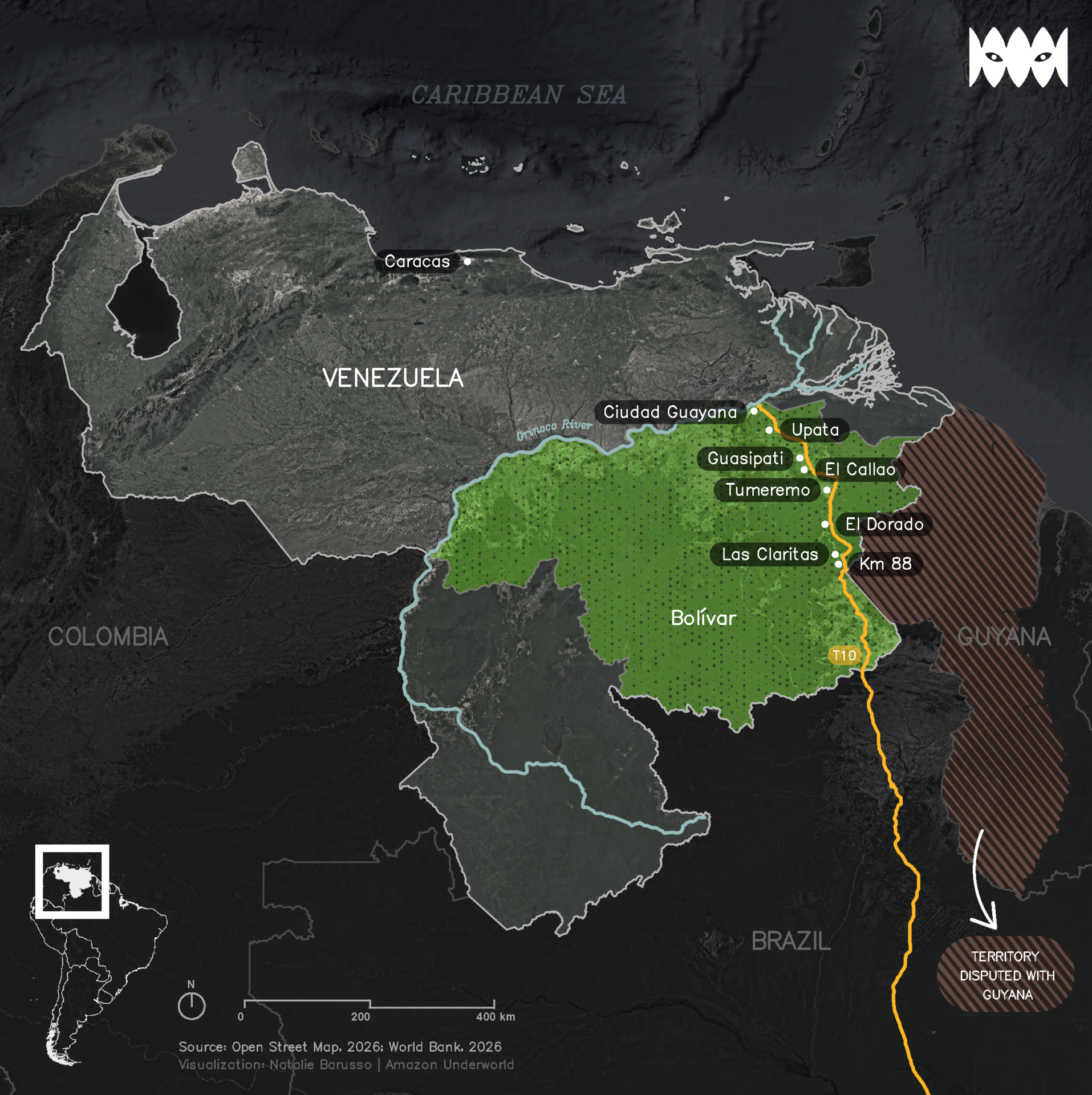
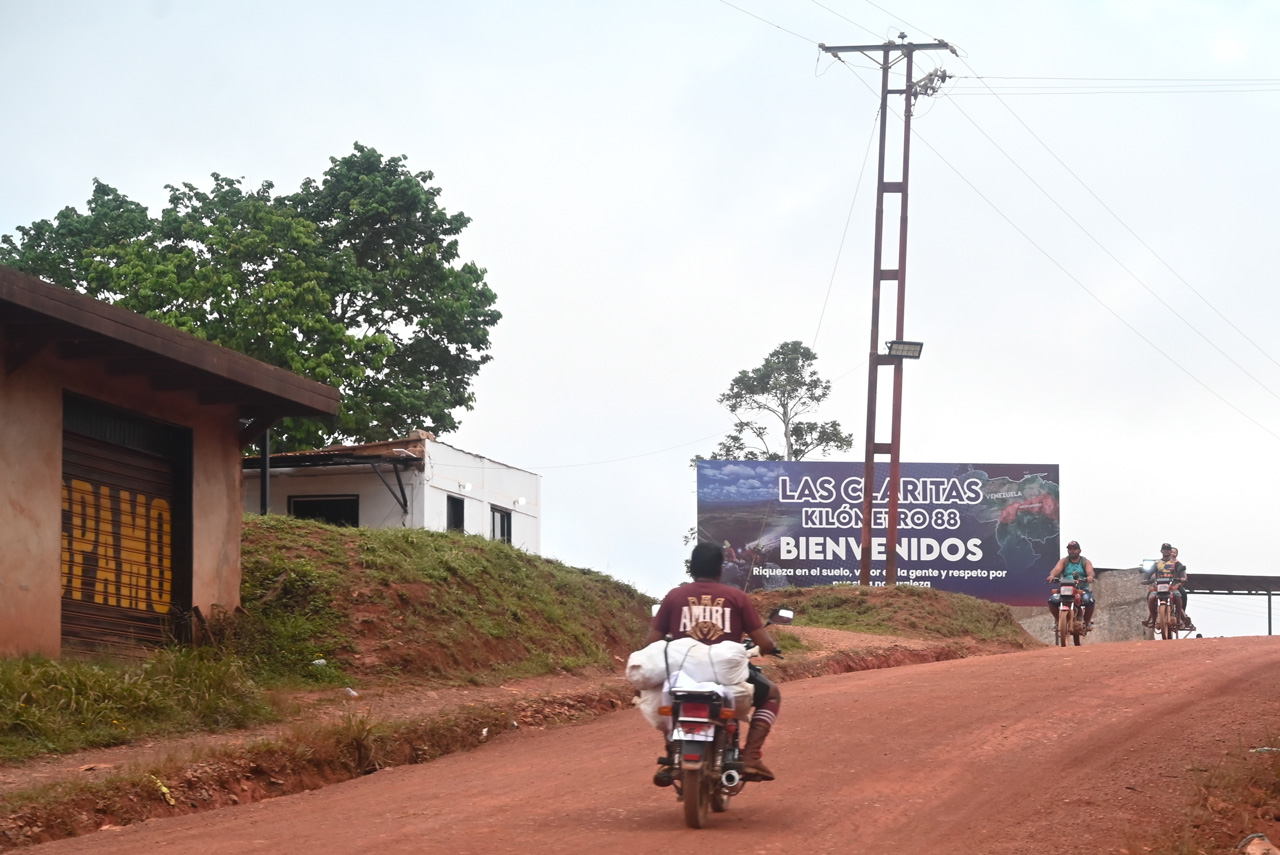
Three months after the June operation, the initial optimism has faded. A recent tour by Amazon Underworld and Armando.info, from Upata south through Guasipati, El Callao, Tumeremo and El Dorado to the Las Claritas-Kilómetro 88 conglomerate at the gateway to La Gran Sabana and Canaima National Park, found that, despite the Tren de Aragua’s beheading and the scattering of leaders who had operated locally for twenty-five years, residents see little change in the underlying dynamics and fear they remain under the gang’s watchful eye. No one can be sure the “pranes” are gone for good.
The violent arrival of the new guardianship did not dispel the “unions”, a regional euphemism for the criminal gangs that locals colloquially call “El Sistema”.
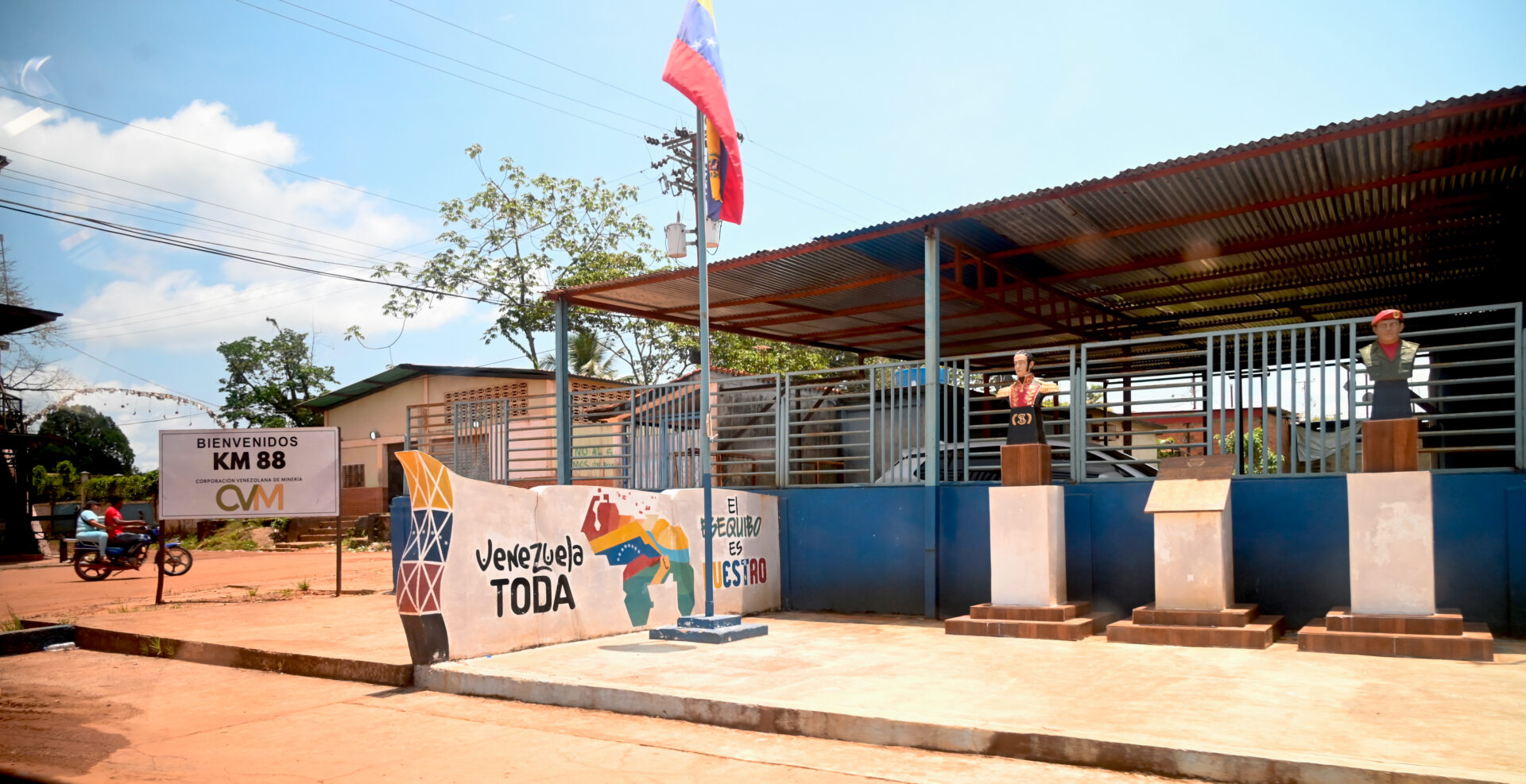
Some cartel leaders, such as “Juancho,” “Humbertico,” and Yohan José Romero, alias “Johan Petrica,” vanished. New actors, such as the Orinoco Mining Arc Protection Group (Gpamo) — made up of all five branches of the Bolivarian National Armed Forces (Army, Navy, Air Force, National Guard, and Militia) together with the General Directorate of Military Counterintelligence (Dgcim) — now maintain a presence, and locals await, with a mix of hope and uncertainty, the announced return of mining multinationals.
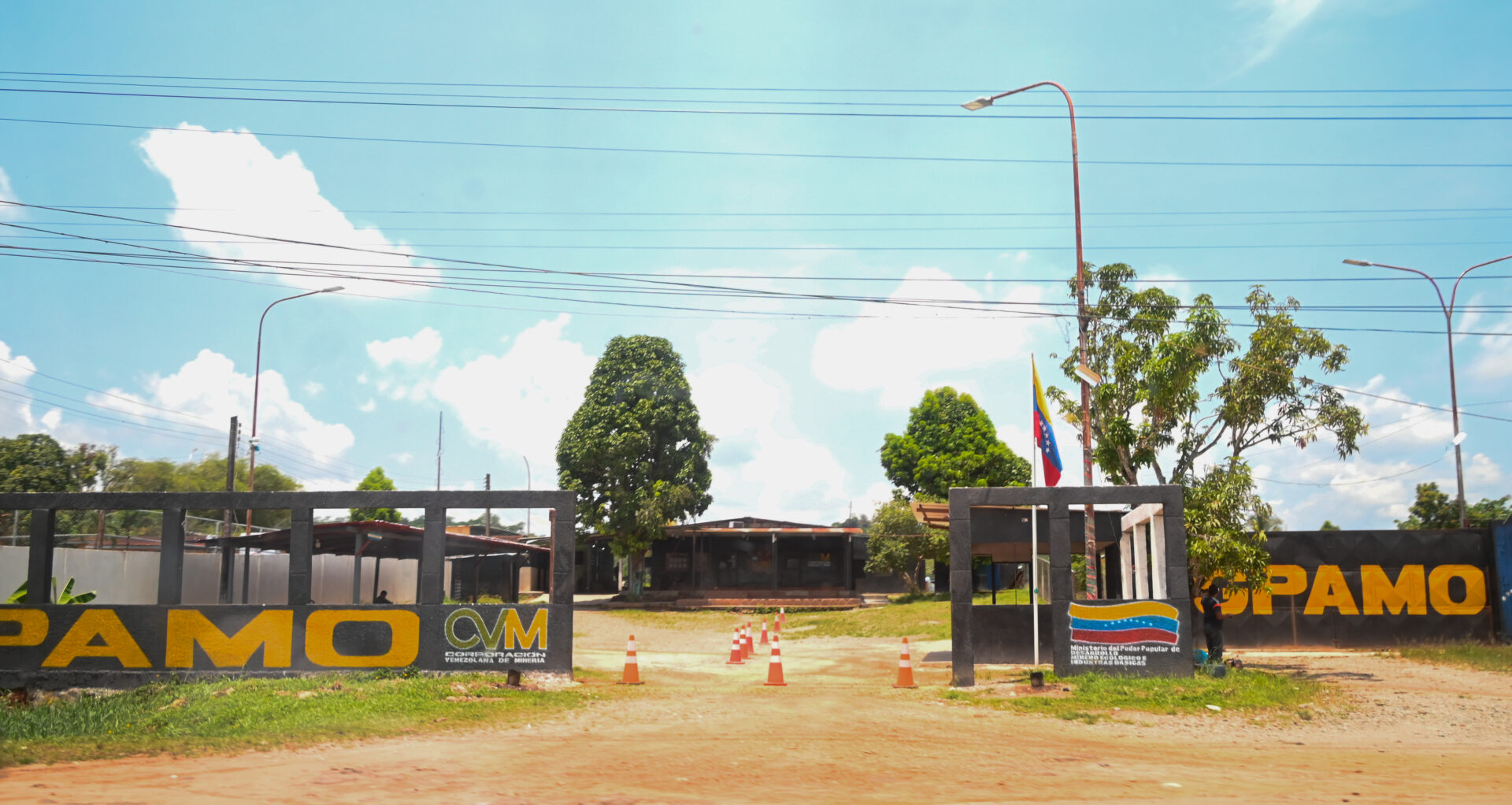
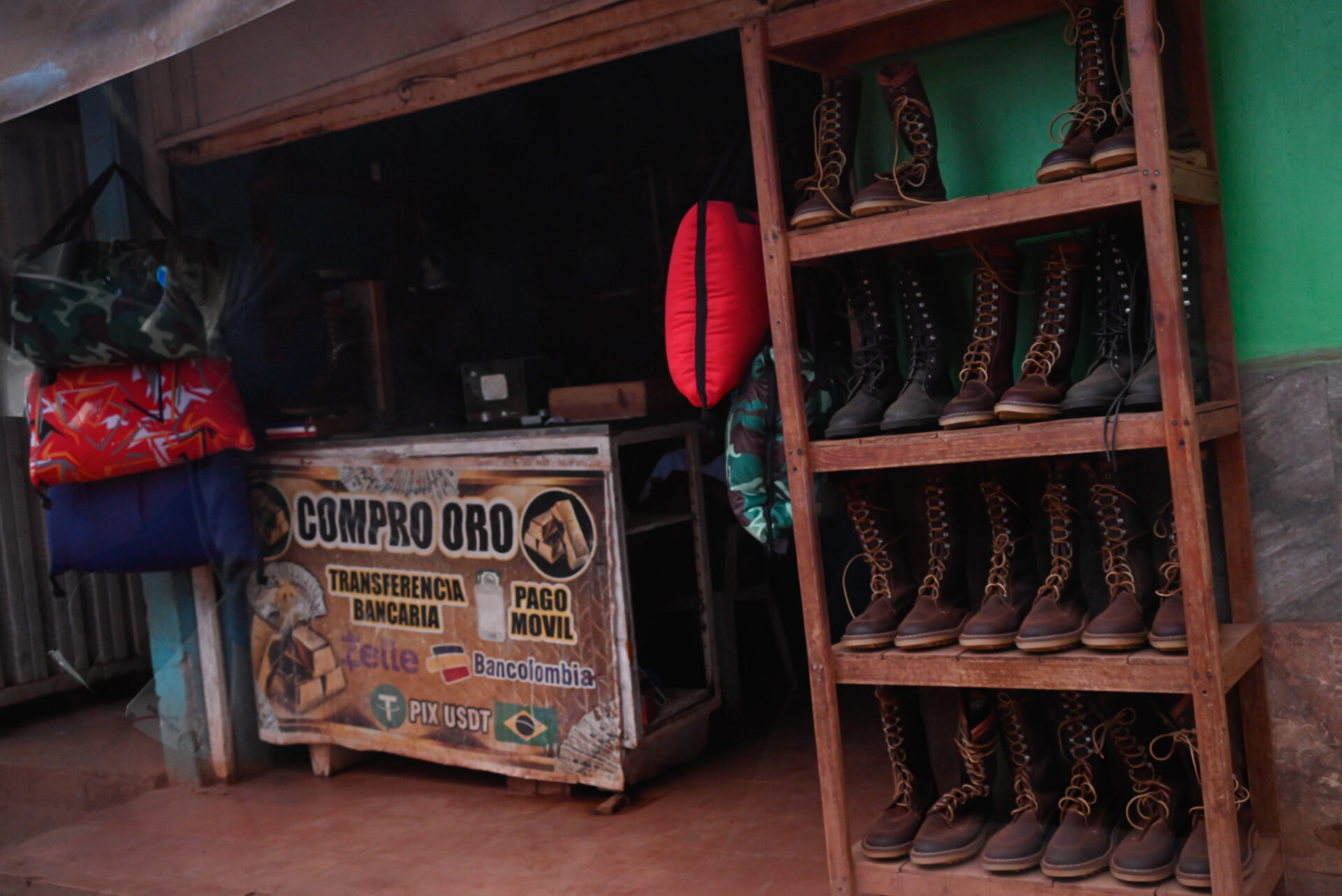
Yet the retreat or hiding of crime’s visible faces did not erase the sense that their control persists in other forms. Not even symbolic changes of the guard have established a new order. The emblematic Las Claritas cockfighting pit, for years “El Sistema’s” operations centre, is now home to Gpamo.
Military and police presence is greater than ever, yet less commercial activity is recorded. Some locals even say they miss the relative order the gangs offered, however ruthless and however arbitrary and atrocious their means. “El Sistema” prevails, though with reforms still under way.
Two versions of events circulate. One holds that the bosses did flee and loosen their iron grip on the town’s life, but dug in at the mines, from where they still run informants embedded in the area. The other comes from those who want to believe the region has been freed.
One well-informed sceptic is Américo de Grazia, a former mayor of Piar municipality, opposition National Assembly deputy, candidate for governor of Bolívar and political prisoner. To back up his doubts, he points to a specific date: June 21, 2026. That day and in the days that followed, barely two weeks after the operation against “Niño Guerrero”, Las Claritas and Kilómetro 88 were back in the news over an organised protest in which demonstrators denounced abuses by the newly stationed troops, including repression and extortion. Those days were tense and chaotic, as they had been since June 9. Classes were suspended, commerce ground to a halt for fear of looting and unrest, miners left en masse and the unreliable power supply worsened.
De Grazia acknowledges the military’s excesses but sees signs of subtler motives behind the protest, which he suspects “Juancho” and “Humbertico” encouraged as an expression of collective longing for their mafia-run order, the implicit message being that the people were calling for their return. He says the leaders’ emissaries remain in the area, reporting any movement to their bosses. “What’s left of the ‘pranes’ are their remnants, their protégés, who could be lurking about, checking who’s passing along information, who’s filming, who’s recording, who’s reporting, who’s making phone calls,” he suggests.
An Indigenous spokesperson, who agreed to speak on condition of anonymity, says the June 9 military operation only forced a tactical retreat by the “pranes.” They’re no longer so visible, but they’re still there.
“It’s known that they’re still moving around the area, though no one knows exactly where,” he says.
“They’re around and they got a tip-off — especially the top bosses — so they could leave before the raids.”
The Indigenous representative now places the fugitive or simply withdrawn bosses somewhere along Los Kilómetros, a string of gold-rush villages stretching along the Troncal 10 highway between El Dorado, or Kilómetro Cero, and Kilómetro 88. Roadside shacks of plastic and wood, motorcycle repair shops and gasoline sold in repurposed soda bottles sit alongside businesses that have grown from those precarious beginnings into sturdier structures of block and cement.
Since the Covid-19 pandemic, when numerous gold-bearing veins were discovered in that forested territory, this strip had been part of the extended domain of “Juancho’s” union. It now appears to be his place of exile.
“There was a move from Las Claritas and Kilómetro 88 to Los Kilómetros, specifically from [kilometre marker] 24 onward, right at the entrance to the Pemón Indigenous village of San Antonio de Roscio,” the Indigenous source says. Yet he maintains: “They’re [still] in town. They’re still in Las Claritas and at 88. They’re also at the mines. […] They don’t show themselves in public, but they keep an eye on everything. So it’s a very, very delicate situation. […] They’re not physically there, but they have informants throughout that whole sector, especially in Las Cristinas.”
He means the nearby gold deposit, one of the world’s five largest, which foreign companies (Canadian, American and Russian) and Venezuelan state entities have fiercely contested. “They’ve got eyes everywhere: that truck over there, that motorcycle, that person,” he adds.
Stories circulate in Las Claritas of “luceros”, the undercover lookouts the “pranes” deploy in the towns, who are said to be receiving reassuring messages from their bosses in hiding: “Be patient, we’re on our way back, we’re negotiating.”
NORMALCY ON HOLD
Mining activity, meanwhile, continues. As if nothing extraordinary had happened, trucks still carry crews of workers — dressed in long-sleeved dry-fit shirts and mud-caked rubber boots — down the main street and side roads of Las Claritas. The golden statue of an artisanal miner, with his gold pan and his dog companions, still stands in a small plaza that has long honored the mines’ workers.
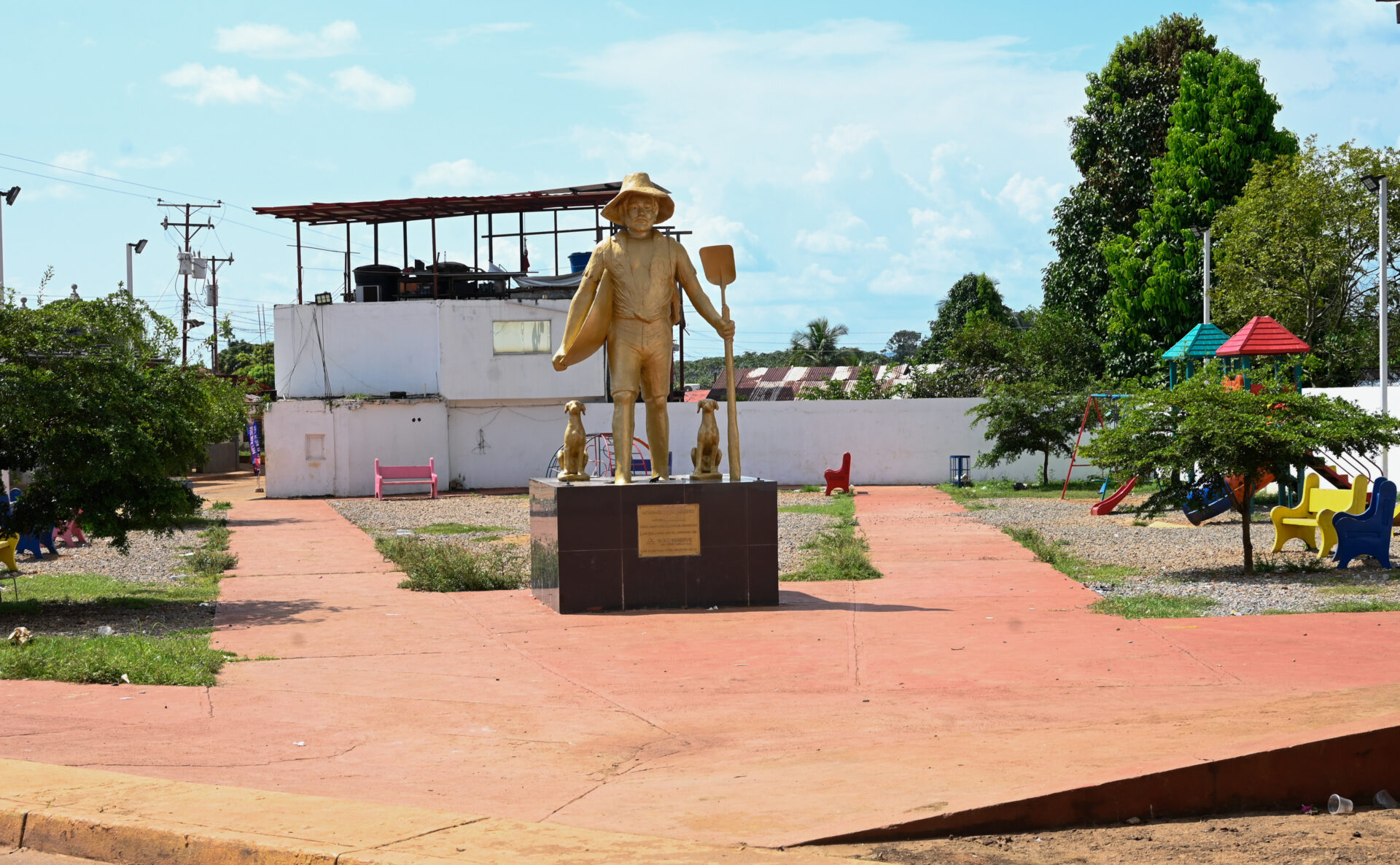
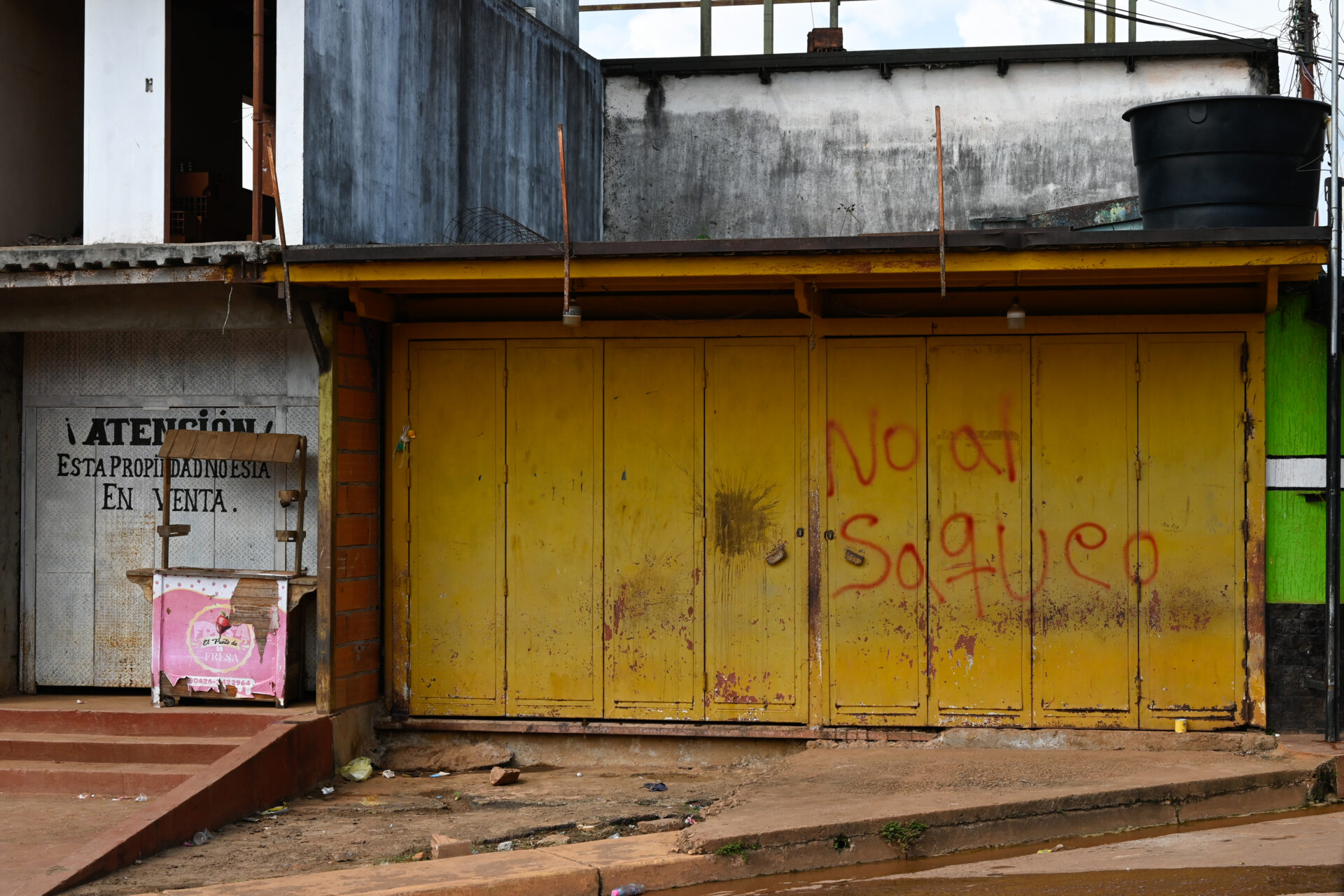
Next to it reads a piece of graffiti: “No to looting.” It’s an inscription left by the unions, meant to serve as a warning — a fading trace of a control that is still exerted and has no intention of letting go. The “mecate,” as mining slang calls the checkpoint for entering the Las Cristinas mines, still operates. The official Gpamo presence also leaves its mark, though it amounts to little more than a banner, planted like a flag but otherwise lifeless.
On August 19, after the release from prison of José Ignacio Moreno Suárez, Gold Reserve’s legal representative, the Canadian mining company announced its return to Venezuela to resume operations at the Las Brisas and Las Cristinas deposits, both near Las Claritas and Kilómetro 88, which Hugo Chávez had expropriated in 2009. But the news means little to residents after nearly two decades of criminal-gang rule and glaring state neglect. Nor do they expect much from the White House’s interest in exploiting the region’s gold after securing control of the country’s oil, a goal Washington made public on March 6 by issuing General License 51, which eases sanctions on transactions involving Venezuelan gold.
Asked about the fallout from the June 9 operation and the prospect of US investment, the bus dispatcher has no doubts either: “It’s the same old story, you can ask around. Since my ‘papá Trun’ [Donald Trump] showed up, I haven’t seen anything new arrive. This town has spent its whole life living off broken promises,” he says, almost shouting. This time, the roar of motorcycles dodging the potholes of the Troncal 10 drowns out everything else, including hope.